
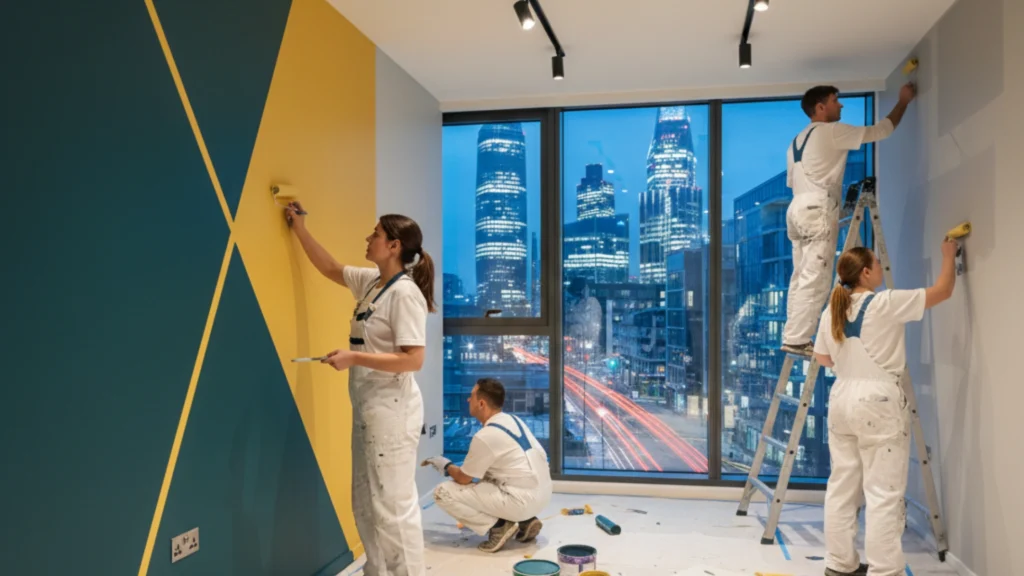
You’ve been planning this for months. The living room in your Canary Wharf flat is about to get its moment. One wall. One stunning colour. The kind of deep, dramatic, gorgeous shade that makes the whole room feel completely different to the magnolia box it currently is.
You’ve chosen the colour. Dark forest green. The kind of green that looks absolutely stunning in every single interior design magazine you’ve scrolled through over the past six weeks. Rich, moody, sophisticated. Exactly the statement you want to make.
You’ve chosen the wall. The one behind your sofa. The one you see first when you walk into the living room. The one that’s going to transform the entire space from ordinary to genuinely impressive.
You hire a painter. They arrive, look at the wall, mix the colour, and start painting. First coat goes on beautifully. Dark and dramatic exactly as planned. Second coat deepens it further. Looks incredible while it’s wet. You’re genuinely excited.
Next morning you walk into the living room and stop. The wall looks good. Actually it looks fine. But something’s wrong. You can’t quite put your finger on it until you notice the small bump where the plaster was slightly uneven behind the sofa. The dark colour has made that bump visible in a way it was completely invisible under the previous magnolia. There’s also a subtle change in sheen where the painter ran out of one tin and started another, creating a barely visible vertical stripe across the middle of your feature wall. And the edges where the dark green meets the lighter walls on either side look slightly uneven because cutting in with a dark colour on a light background exposes every single millimetre of imprecision.
The wall behind your sofa is now the most scrutinised surface in your entire flat. Everyone who walks into your living room looks directly at it first. Every tiny imperfection is amplified enormously by the dark colour and the focal point positioning. It would have been completely invisible on any other wall painted any other colour.
Welcome to the expensive disappointment of hiring painters who don’t understand what feature walls actually demand. A feature wall isn’t just a wall painted a different colour. It’s the single most visible surface in your home, painted in a way that magnifies every imperfection, positioned exactly where everyone looks first, and expected to look genuinely stunning rather than merely adequate.
I’ve spent ten years painting feature walls across Canary Wharf and Isle of Dogs. Getting them genuinely right requires understanding that feature walls operate under completely different rules to every other painted surface in your flat.
Why Feature Walls Are The Hardest Surface In Your Flat
This sounds dramatic but it’s genuinely true. A feature wall is simultaneously the most visible surface in the room, painted in a colour that reveals imperfections standard colours hide, and expected to deliver dramatic visual impact that only works if the execution is flawless.
Dark colours reveal everything. This is the single most important thing to understand about feature walls. Magnolia hides imperfections. Brilliant white hides imperfections. A deep forest green, navy blue, or rich burgundy reveals every single one. Bumps in the plaster. Hairline cracks. Uneven texture. Patches where filler has been applied. All invisible under light colours and blindingly obvious under dark ones.
A feature wall painted in a dark colour requires surface preparation that standard walls simply don’t need. Not because the technique is different. Because the standard of perfection required is dramatically higher.
The focal point positioning amplifies everything. A feature wall is chosen specifically because it’s where people look first. Any imperfection on that wall gets more scrutiny than imperfections anywhere else in the flat. A slightly uneven cut-in line on a hallway wall goes completely unnoticed. The same imprecision on a feature wall is the first thing every visitor’s eyes land on when they enter the room.
The colour transition demands absolute precision. Where the feature wall colour meets lighter colours on adjacent walls creates edges that must be razor sharp. Any bleed, any wobble, any inconsistency in that edge line is immediately visible because the contrast between dark feature wall and light surrounding walls is maximum. Cutting in dark colours against light backgrounds is significantly harder than cutting in light colours against light backgrounds.
The surface must be genuinely flat. Not flat enough for standard emulsion. Genuinely, museum quality flat. A dark colour on an uneven surface creates shadows and highlights that make the unevenness visible from across the room in ways nobody anticipated when choosing the colour.
The E14 Feature Wall Challenge
Canary Wharf flats present specific complications for feature walls that intensify every general challenge considerably.
The light in E14 flats is often extraordinary. Riverside facing flats get stunning direct sunlight that creates dramatic shadows on walls throughout the day. A feature wall in direct sunlight will show every single surface imperfection through shadow casting. Getting the surface genuinely perfect before painting matters enormously when the light conditions are this demanding.
Open plan layouts common in Canary Wharf mean feature walls are visible from multiple angles simultaneously. A feature wall visible only from one direction might tolerate minor imperfections. A feature wall visible from the kitchen, the dining area, and the sofa simultaneously gets scrutinised from three different angles. Every single direction needs to look perfect because someone will eventually be looking at it from there.
The existing plaster condition in older E14 developments varies significantly. Some walls are perfectly smooth original plaster. Some have decades of paint layers creating subtle texture variations invisible under light colours. Some have been patched and filled multiple times throughout the building’s life. A feature wall painter needs thorough assessment of actual surface condition before committing to a dark colour that will reveal everything the previous colours have been hiding.
A Real Project: The West India Quay Feature Wall
Couple in West India Quay had been planning a feature wall in their living room for months. Gorgeous riverside flat, stunning natural light, and a living room that needed one dramatic visual element to genuinely transform it from pleasant to memorable.
They chose deep navy blue for the wall behind their main seating area. Beautiful colour choice that would look stunning executed properly. They hired a painter with excellent reviews who had completed standard repaints across Canary Wharf flats successfully.
The surface preparation was completely inadequate for a dark feature wall. The painter cleaned the wall, filled one obvious crack they spotted during a quick visual inspection, sanded lightly, and started painting. Standard preparation for standard emulsion on a standard wall. Completely inadequate for a dark colour on a focal point surface that would magnify every imperfection the room contained.
The wall had subtle texture variations from previous paint layers that were entirely invisible under the existing magnolia. Under navy blue, these variations created a mottled appearance visible from the sofa, from the kitchen, and from the hallway entrance simultaneously. The single crack that was filled had three other hairline cracks nearby that nobody spotted because the painter hadn’t examined the wall with the level of attention a dark feature wall genuinely demands.
The cut-in edges were visibly imprecise. Cutting in navy blue against the cream walls on either side required absolute precision that standard masking tape technique doesn’t reliably achieve. Two sections of the edge line showed slight inconsistency that was invisible at painting height but obvious when viewed from sofa level where eye height looked directly at those transitions between colours.
The sheen variation created an ongoing problem. The painter used one tin for the first coat and a second tin for the second coat. The two tins had slightly different sheen levels, possibly from different production batches. On a light colour this difference would be completely invisible. On a dark navy feature wall it created a vertical stripe visible in certain light conditions throughout the entire day regardless of season.
We stripped and remediated the entire wall properly. First, thorough surface assessment under raking light to reveal every imperfection the dark colour would expose. Found seven areas requiring filling and sanding that the original painter had missed entirely because standard ambient light assessment doesn’t reveal what dark colours will show once applied.
Achieved genuinely flat surface condition across the entire wall before any paint went anywhere near it. Single batch of paint used throughout to eliminate any possibility of sheen variation between tins. Cut-in edges achieved with specialist technique appropriate for high-contrast dark-on-light transitions rather than standard masking tape method.
The finished wall looked genuinely stunning. The couple finally had the feature wall they’d been planning for months. It just required a completely different standard of execution to what standard wall painting demands and what the previous painter had understood.
What Feature Wall Painting Actually Requires
Let me be specific about what genuinely understanding feature walls means for painters working in Canary Wharf flats.
Raking light surface assessment before any preparation begins. The wall needs examining under strong directional light that reveals every imperfection a dark colour will expose. A torch held at an angle to the surface reveals bumps, texture variations, and hairline cracks that remain entirely invisible under normal room lighting conditions.
Standard painters examine walls under ambient light. Feature wall painters use raking light assessment because they understand what dark colours will reveal once applied.
Museum quality surface preparation throughout. Every imperfection found during raking light assessment needs filling, sanding, and priming to genuinely flat condition. Not flat enough for standard emulsion. Flat enough that a dark colour reveals absolutely nothing underneath. This preparation takes significantly longer than standard wall preparation and the time difference must be reflected in the quote.
Single batch paint specification. All paint for a feature wall should come from the same production batch to eliminate any possibility of sheen variation between tins. For larger walls, this might mean ordering more paint from one batch than standard estimation suggests is necessary.
Specialist dark-on-light cutting in technique. The edges where a dark feature wall meets lighter surrounding walls require precision that standard masking tape method doesn’t reliably achieve. Specialist cutting in methods exist specifically for high-contrast colour transitions and experienced feature wall painters use them automatically without being reminded.
Choosing The Right Wall
The wall selection matters as much as the colour selection and many first-time feature wall owners get this wrong entirely.
The focal point wall is usually the correct choice. The wall you see first when entering the room. The wall behind your main seating area. The wall opposite the largest window. These walls receive maximum visual attention and therefore deliver maximum impact when painted as a feature.
Walls with interruptions work less well. A wall broken up by windows, doors, alcoves, or other architectural features dilutes the feature wall impact significantly. A solid, uninterrupted wall delivers maximum visual drama because the colour has space to make its full statement without competing with other elements.
The light hitting the wall throughout the day matters enormously. A feature wall in direct sunlight will catch light dramatically but will also show imperfections through shadow casting. A feature wall in shade will look more consistently even but won’t have the same dramatic presence. Understanding which situation your chosen wall presents helps set both expectations and preparation standards accordingly before committing to anything.
What to Demand From Feature Wall Painters
If you want a feature wall in your E14 flat, these specifics protect your investment and ensure the result actually delivers the impact you’ve been imagining.
Raking light assessment before any preparation starts. They should examine the wall under directional light before touching it with anything. If they’re assessing the wall under normal room lighting, they haven’t understood what dark colours actually reveal once applied.
Single batch paint confirmation. They should confirm all paint for your feature wall comes from the same production batch. If they haven’t considered batch variation as a genuine risk, they haven’t painted enough dark feature walls to understand what can go wrong.
Specialist cutting in technique for dark on light edges. They should explain specifically how they’re achieving the edges where your feature wall meets surrounding walls. Standard masking tape technique simply isn’t precise enough for the contrast levels feature walls create.
Genuine surface preparation time reflected in the quote. Feature wall preparation takes significantly longer than standard wall preparation. If the quote suggests the same timeframe as a standard repaint, the preparation isn’t being taken seriously enough for what a feature wall genuinely demands.
Get Your Feature Wall Right
A feature wall is the single most visible surface in your home. It deserves a level of preparation, precision, and specialist understanding that standard wall painting simply doesn’t require and most painters simply don’t deliver.
We specialise in feature walls across Canary Wharf and Isle of Dogs. We assess surfaces properly before painting anything. We achieve genuinely flat preparation. We use specialist technique for dark colour edges. And we help you choose walls and colours that actually deliver the dramatic impact you’ve been planning.
Call for quote now: 07507 226422 Email: hello@havenedge.co.uk Website: www.havenedge.co.uk