
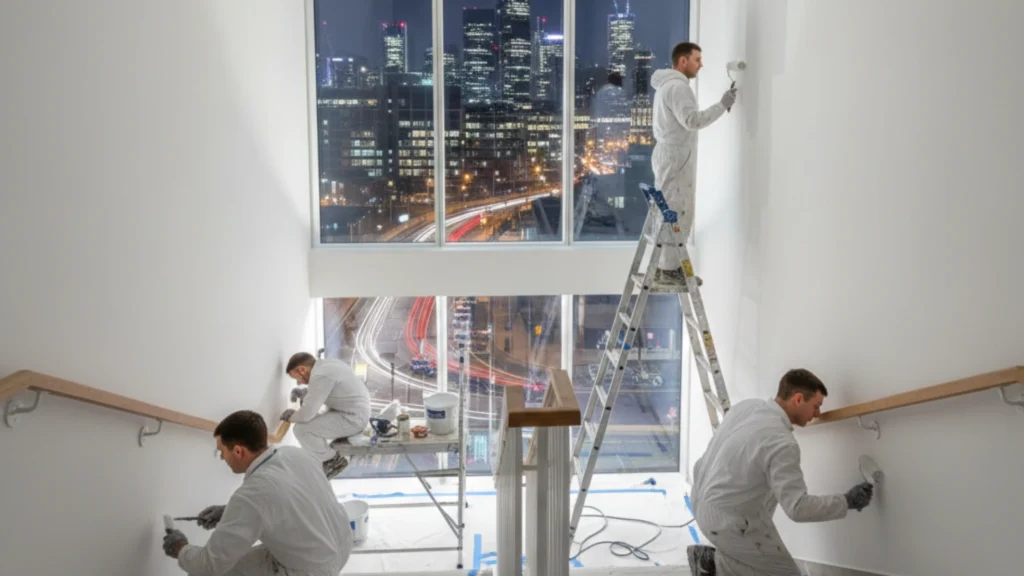
You’re on the residents’ committee for your Canary Wharf building. Twelve flats. One stairwell. Three floors. The communal stairwell hasn’t been properly painted in four years and it’s starting to look genuinely shabby. Scuff marks along every wall at hand height. The banister paint is worn through in patches where residents grip it daily going up and down. The ceiling on the second floor landing has a brownish discolouration from a leak that was fixed two years ago but nobody painted over afterwards.
You raise it at the next residents’ meeting. Everyone agrees it needs doing. Building management is contacted. They send a contractor. The contractor turns up on a Tuesday afternoon, looks at the stairwell for about thirty seconds, and quotes for a standard repaint. Two coats throughout. Should take half a day. Sounds reasonable. Building management approves it because it’s cheap and quick.
The contractor arrives Wednesday morning. Starts painting the ground floor walls. By Wednesday lunchtime they’ve done the ground floor and moved upstairs. By Wednesday 3pm they’ve finished the entire stairwell. Packed up. Gone.
Wednesday evening residents start coming home from work. The first thing everyone notices isn’t that the stairwell looks fresh and clean. It’s that the paint is still wet. Actually wet. A resident touches the banister on the way up to their flat and gets fresh paint on their hand. Another resident’s child brushes against the second floor wall walking past and transfers a smear of wet paint onto their school jacket.
The discolouration on the second floor ceiling is still visible through the fresh paint because nobody sealed it before painting over it. The scuff marks along the walls are partially visible underneath the new paint because one coat of standard emulsion doesn’t cover years of accumulated marks on a high-traffic communal surface. And by Thursday morning, several residents have noticed the paint is already showing wear where the banister meets the wall on each landing because standard interior emulsion was used on surfaces that get physically contacted dozens of times daily by dozens of different people.
Welcome to the expensive disappointment of hiring painters who treat communal stairwells like standard interior rooms. A stairwell isn’t a bedroom or a living room. It’s a high-traffic communal space shared by every single resident in the building, used constantly throughout every single day, and subject to building management requirements, fire safety regulations, and resident expectations that standard residential painting simply doesn’t account for.
I’ve spent ten years painting communal stairwells and common areas across Canary Wharf and Isle of Dogs. Getting these spaces genuinely right requires understanding that communal areas operate under completely different rules to private flats and the consequences of getting it wrong affect every single resident in the building simultaneously.
Why Stairwell Painting Is Completely Different To Flat Painting
A stairwell looks like a collection of walls and ceilings. Same surfaces, same general idea of covering them with paint. But the environment, the usage levels, the regulatory requirements, and the expectations placed on the result are fundamentally different to anything encountered in private residential painting.
The traffic volume is extraordinary. A private flat wall might be touched occasionally during normal daily life. A communal stairwell wall gets touched, brushed against, leaned on, and physically contacted by every single resident in the building multiple times daily. A twelve flat building means potentially twenty four or more adults plus children moving through that stairwell every single day. The physical wear on communal stairwell surfaces is dramatically higher than anything private residential painting encounters.
Standard interior emulsion simply cannot withstand this level of physical contact. It chips, scuffs, and deteriorates visibly within weeks of application in high-traffic communal areas. Communal area specific paint systems are formulated to withstand sustained physical contact from multiple users indefinitely. Using the wrong product category on a communal stairwell guarantees visible deterioration within the first month of use.
Fire safety regulations affect what products can actually be used. Communal stairwells in residential buildings are designated fire escape routes. This designation means specific fire safety requirements apply to every surface treatment in the space. Certain paint types are prohibited. Certain finish levels are restricted. Certain preparation methods might affect fire-rated coatings already present on walls or ceilings that must not be compromised.
Painters who understand communal area fire safety requirements specify products that comply automatically. Painters who treat stairwells like private flats might inadvertently apply products that compromise fire safety compliance, which creates genuine legal liability for building management and potentially for the residents’ committee that approved the work.
Building management approval processes exist for good reason. Communal areas belong to the building, not to individual residents. Any work in communal spaces requires building management approval, often with specific requirements about contractor qualifications, insurance levels, product specifications, and working method. These requirements exist to protect the building, protect residents, and maintain compliance with building regulations.
Painters who understand communal area requirements navigate these approval processes efficiently. Painters who don’t understand them either get rejected at the approval stage, causing delays, or worse, proceed without proper approval and create compliance problems that building management discovers afterwards.
The Canary Wharf Stairwell Challenge
E14 communal stairwells present specific complications that intensify every general difficulty considerably.
The resident disruption sensitivity is extremely high. Canary Wharf residents pay significant service charges partly for well-maintained communal areas. They also expect that maintenance work doesn’t significantly disrupt their daily lives. Painting a stairwell means the primary route through the building smells of fresh paint, has wet surfaces residents must avoid, and potentially requires temporary alternative access arrangements during working hours.
Professional communal area painters plan work around resident movement patterns. They understand peak usage times, plan drying schedules around when residents are least likely to encounter wet surfaces, and communicate clearly about what’s happening and when it’s safe to use the stairwell again.
The multiple stakeholder situation creates complexity nobody anticipates. The residents’ committee wants it done quickly and affordably. Building management wants it done compliantly and professionally. Individual residents want minimal disruption to their daily routine. The contractor needs access, time, and appropriate working conditions. Balancing all of these competing requirements simultaneously requires experience with communal area politics that private residential painters have never encountered.
The existing condition often includes fire-rated coatings that cannot be disturbed. Many E14 buildings installed fire-rated intumescent coatings on stairwell walls and ceilings during construction or subsequent upgrades. These coatings provide specific fire protection and must not be sanded, scraped, or painted over with products that compromise their fire rating.
Professional communal area painters identify these coatings before starting any preparation work. Painters who don’t know intumescent coatings exist might sand or scrape them during preparation, compromising fire protection without realising what they’ve done.
A Real Project: The Blackwall Basin Stairwell
Sixteen flat building near Blackwall Basin. Residents’ committee had been trying to get the communal stairwell repainted for over a year. Building management kept sending the cheapest available contractor. Each time the work looked adequate initially and deteriorated within months because nobody was specifying products or preparation appropriate for high-traffic communal use.
The most recent attempt had been completed three months before we were contacted. Standard interior emulsion throughout. Two coats applied in a single day by a painter who clearly treated the stairwell like a collection of private flat walls rather than a shared communal space.
The deterioration had already begun. Three months after fresh painting, scuff marks were reappearing along every wall at hand height. The banister paint was already showing wear at every landing where residents gripped it most frequently. The second floor ceiling, which had a previous water stain sealed and painted over, was showing discolouration again because the sealing treatment used wasn’t appropriate for the moisture conditions in that section of the stairwell.
The fire safety situation had been completely ignored. The building had intumescent fire-rated coatings on the stairwell walls installed during a fire safety upgrade three years earlier. The previous painter had sanded sections of these coatings during surface preparation without any awareness that they were fire-rated and must not be disturbed. Building management discovered this during a routine fire safety inspection and immediately flagged it as a compliance issue requiring specialist remediation.
We assessed everything properly before touching anything. First, complete identification of all fire-rated coatings throughout the stairwell. Mapping exactly where intumescent treatments existed and ensuring our preparation work stayed entirely clear of these areas. The fire safety compliance issue from the previous painter’s sanding required specialist assessment and remediation before any decorative painting could proceed.
Specialist communal area paint system specified throughout. Products formulated specifically for high-traffic shared spaces, withstanding the physical contact levels communal stairwells actually experience rather than the minimal contact private flat walls encounter. Appropriate coverage levels achieved through proper application technique rather than assuming two quick coats would suffice on surfaces that needed significantly more thorough treatment.
The resident communication was handled completely. Schedule communicated to all residents in advance. Working hours planned around peak usage times. Drying times clearly communicated so residents knew exactly when surfaces were safe to touch and use. The entire process managed so that disruption was genuinely minimal rather than simply hoping residents would figure it out themselves.
The stairwell looked genuinely professional when finished. More importantly, it looked professional three months later, six months later, and continues looking professional now because the products and preparation were actually suited to what a communal stairwell genuinely demands rather than what a private flat wall requires.
What Communal Stairwell Painting Actually Requires
Let me be specific about what genuinely understanding communal area painting means in practice.
Fire safety assessment before any preparation begins. Every stairwell in a managed residential building needs complete assessment for fire-rated coatings, intumescent treatments, and fire safety products before any sanding, scraping, or surface preparation happens. Disturbing these coatings creates genuine safety and legal compliance issues that building management takes extremely seriously.
Professional communal area painters identify fire-rated treatments automatically before touching anything. Painters who don’t know these treatments exist might compromise fire safety without any awareness of what they’ve done.
High-traffic communal product specification throughout. Not standard interior emulsion. Not standard kitchen paint. Specifically formulated communal area paint systems designed to withstand sustained physical contact from multiple users over extended periods. These products cure harder, resist scuffs and marks significantly better, and maintain appearance under high-traffic conditions indefinitely.
Proper coverage for high-wear surfaces. Communal stairwells need significantly more thorough coverage than private flat walls because the existing surface condition, accumulated scuff marks, previous paint layers, and general wear, requires more paint volume and more application passes to achieve genuinely clean, even coverage.
Two quick coats applied in an afternoon is adequate for a private bedroom wall. A communal stairwell with years of accumulated wear needs proper coverage achieved through appropriate application technique and sufficient paint volume, which takes considerably longer than painting equivalent wall area in a private flat.
Resident communication and scheduling around usage patterns. Communal stairwells are used constantly throughout every day. Planning painting work around resident movement, communicating clearly about timelines and drying schedules, and ensuring wet surfaces don’t create hazards or damage to residents’ property requires understanding communal area logistics that private residential painters have never encountered.
The Building Management Relationship
Communal area painting happens within a specific relationship dynamic between residents, building management, and contractors that private residential painting simply doesnites involve.
Building management controls the approval process. They specify what’s acceptable, what products comply with building requirements, and what contractor qualifications are necessary. Painters who understand this relationship navigate it efficiently. Painters who don’t understand it create friction that delays work and frustrates everyone involved.
The residents’ committee often initiates but doesn’t control. Residents notice the stairwell needs painting and raise it with building management. But building management makes the final decisions about contractor selection, product specification, and working method. Understanding this dynamic helps painters position themselves appropriately rather than working at cross-purposes with the approval process.
Compliance documentation matters enormously. Building management needs evidence that communal area painting was completed compliantly. Product specifications, fire safety assessments, contractor qualifications, all of this documentation supports the building’s compliance records. Painters who provide this documentation automatically make building management’s job easier. Painters who don’t create compliance gaps that building management has to chase.
What Residents’ Committees Should Demand
If your E14 building’s communal stairwell needs painting, these specifics protect your building, your residents, and your compliance simultaneously.
Fire safety assessment confirmed before any work starts. The painter should identify all fire-rated coatings before touching any surface. If they haven’t mentioned fire safety as part of their assessment, they might not know intumescent coatings exist. This isn’t optional. It’s a genuine safety and legal compliance requirement.
Communal area specific product specification confirmed. Not standard interior emulsion. Specifically formulated high-traffic communal products. If they’re proposing the same products they’d use in a private flat, the finish will deteriorate visibly within weeks under communal stairwell usage levels.
Resident disruption plan included in the proposal. How they’ll manage wet surfaces, when residents can safely use the stairwell, what communication will be provided. If they haven’t considered resident disruption as part of their planning, the work will cause unnecessary inconvenience and potentially damage to residents’ property.
Building management compliance documentation provided. Product specifications, fire safety assessment records, contractor qualification evidence. If they can’t provide this documentation, building management will have compliance gaps in their records that someone has to chase and fill.
Get Your Communal Areas Done Properly
Communal stairwell painting requires understanding fire safety compliance, high-traffic product specification, resident disruption management, and the building management approval process that private residential painting simply doesn’t involve. Getting it right benefits every single resident in the building simultaneously. Getting it wrong affects every single resident in the building simultaneously.
We specialise in communal area painting across Canary Wharf and Isle of Dogs. We assess fire safety requirements before touching anything. We specify products formulated for high-traffic shared spaces. We manage resident disruption properly. And we provide the compliance documentation building management needs without being chased for it.
Call for quote now: 07507 226422 Email: hello@havenedge.co.uk Website: www.havenedge.co.uk