
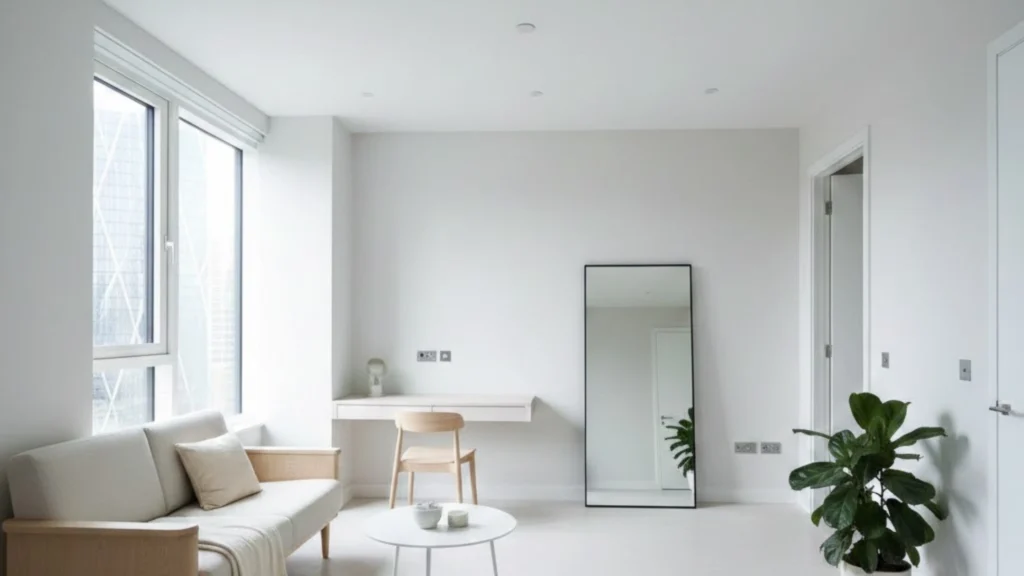
You moved into your Canary Wharf flat in September. Fourteenth floor. Beautiful views across the Thames. One bedroom. Good layout. Everything you wanted except one detail the estate agent mentioned quite casually during the viewing.
“North-facing aspect. Doesn’t get direct sunlight but you do get lovely consistent light throughout the day.”
Fine. You’d read that north-facing flats have consistent light without the harsh afternoon sun that south-facing properties get. Sounded sophisticated. Professional photographers prefer north light. It would be fine.
You moved in. Spent the first month settling in before deciding to redecorate. The existing magnolia walls looked tired and you wanted something with more personality. You researched popular colour trends. Scrolled through hundreds of interior design posts showing gorgeous flats painted in sophisticated greys. Found the perfect shade. A beautiful mid-grey called something like Urban Shadow or Metropolitan Dusk. Looked elegant and contemporary in every photo you saw.
Your painter mixed the exact colour. Applied two perfect coats throughout the living room and bedroom. The coverage was flawless. The finish was exactly what you’d specified. The colour matched the sample precisely. Everything was executed perfectly.
https://havenedge.co.uk/e14-interior-painters/https://havenedge.co.uk/e14-interior-painters/Then November arrived. The days got shorter. The sun dropped lower in the sky. And you realised your flat felt genuinely depressing to be in. Not just dim. Actually oppressive. The grey walls that looked sophisticated in the paint shop samples looked flat and lifeless in your north-facing rooms. The consistent light the estate agent mentioned wasn’t bright consistent light. It was dim consistent light. And the grey walls were absorbing what little light entered through your windows and giving almost nothing back.
By December you were avoiding being home. The flat felt like a cave. You started going to cafes after work rather than coming straight home because the thought of spending an evening surrounded by grey walls in dim light genuinely affected your mood.
Welcome to the expensive mistake of painting a north-facing Canary Wharf flat using colour choices designed for bright south-facing rooms. North-facing apartments don’t get direct sunlight at any point during the day. The light they receive is reflected skylight, consistently dimmer than south-facing properties throughout every season. Painting these already dim spaces with colours that absorb rather than reflect light creates living conditions that genuinely affect wellbeing.
I’ve spent ten years painting north-facing flats across Canary Wharf and Isle of Dogs. The number of residents who make their naturally dim spaces genuinely depressing through completely wrong colour and finish choices is heartbreaking because the principles that brighten north-facing rooms are straightforward once you understand them.
Why Are North-Facing E14 Flats Darker Than South-Facing Properties?
The difference isn’t subtle or psychological. It’s measurable physics that affects your flat every single day regardless of season.
South-facing flats receive direct sunlight for several hours daily. The sun moves across the southern sky, sending light directly through south-facing windows into the property. Direct sunlight is dramatically brighter than reflected skylight. A south-facing room on a clear day receives light levels roughly five to eight times higher than a north-facing room at the same time.
North-facing flats never receive direct sunlight. The sun moves across the southern sky throughout the day, meaning north-facing windows only receive light reflected from the sky itself rather than direct sunlight. This reflected skylight is substantially dimmer than direct sun, producing the consistent but genuinely low light levels estate agents euphemistically describe as soft or professional lighting.
The light difference compounds throughout the year. Summer provides longer days and higher sun angles, meaning even north-facing flats receive decent reflected light levels during June and July. Winter drops the sun lower in the sky with dramatically shorter days, meaning north-facing flats from November through February receive genuinely minimal light throughout the entire day.
Canary Wharf’s tower density creates additional shadowing. Many E14 developments have neighbouring towers that block portions of the northern sky, reducing even the reflected skylight available to north-facing windows. Your north-facing flat isn’t just missing direct sunlight. It’s receiving reduced reflected skylight compared to north-facing properties with clear sky views.
The light quality in north-facing rooms is also cooler in colour temperature. Sunlight is warm. Reflected skylight is cool. This cool light makes colours appear differently than they do under warm light, particularly affecting how greys and whites read in the space. Colours that look warm and welcoming in the paint shop under artificial lighting look cold and institutional in north-facing rooms under natural skylight.
What’s The Difference Between Warm And Cool Undertones In Low Light Conditions?
This distinction determines whether your north-facing flat feels welcoming or genuinely depressing because undertones interact with light quality in ways that completely change perceived colour.
Cool greys have blue or green undertones. In bright warm southern light these undertones stay subtle, reading as sophisticated neutral greys. In dim cool northern skylight these same undertones become dominant, making the grey look noticeably blue-grey or green-grey rather than neutral. The cool undertones amplify the cool light quality, creating spaces that feel genuinely cold rather than elegantly neutral.
Warm greys have beige, pink, or yellow undertones. In bright warm southern light these undertones can look slightly dirty or off-white rather than clean grey. In dim cool northern skylight these warm undertones counteract the cool light quality, producing colours that actually read as neutral grey rather than blue-grey. The warm undertones balance the cool light, creating spaces that feel neutral rather than cold.
Pure white has no undertones theoretically but reads very differently in north versus south light. In bright southern light pure white looks clean and bright. In dim northern skylight pure white looks flat and slightly dingy because there isn’t enough light to make it glow. Pure white needs abundant light to look genuinely white rather than greyish off-white.
Warm whites with cream or yellow undertones look slightly creamy in bright southern light but read as clean white in dim northern skylight. The warm undertones compensate for the cool light and low light levels, producing a colour that appears brighter and cleaner than pure white would in identical lighting conditions.
The Instagram flats painted in sophisticated cool greys are almost universally south-facing or have exceptional artificial lighting throughout. The cool greys work in those spaces because warm abundant light balances the cool undertones. Your north-facing Canary Wharf flat with dim cool skylight makes those same cool greys look genuinely depressing.
A Real Project: The Blackwall Basin North-Facing Nightmare
One bed flat in a Blackwall Basin development. Twelfth floor. North-facing. Single aspect, meaning windows on one side only, all facing north. The owner had lived with magnolia walls for two years and wanted something more sophisticated.
They researched contemporary colour palettes. Found a scheme they loved. Fashionable greige throughout. A grey with subtle brown undertones that looked beautiful in magazine features and online inspiration images. They bought premium paint in the exact colour. Hired a decorator who executed everything perfectly. Two coats throughout. Flawless coverage. The colour matched the sample exactly.
November arrived. The flat felt genuinely oppressive.
The greige had cool undertones despite appearing warm in samples. What read as warm brown-grey under the paint shop’s warm artificial lighting read as cold grey-green under the flat’s dim northern skylight. The subtle brown undertones weren’t strong enough to counteract the cool light quality, leaving a colour that felt institutional rather than sophisticated.
The light levels throughout the flat were genuinely low. The north-facing single aspect meant no light from any other direction to supplement the dim skylight entering through the main windows. The greige walls absorbed most of the limited light available, giving almost nothing back to brighten the space.
The owner developed genuine low mood from spending time in the flat. Not dramatic clinical depression but noticeable mood deterioration. They found themselves making excuses to be elsewhere. Spending money on cafes and restaurants rather than being home. The flat that should have felt like sanctuary felt like somewhere to avoid.
We repainted with colours actually suited to north-facing low light realities. Warm white with pronounced cream undertones throughout all walls. Not pure white, which would look flat and dingy in the available light. A distinctly cream-toned white that felt warm and welcoming despite the cool northern skylight.
The ceiling painted in slightly higher reflectance white than the walls rather than the same colour. This created subtle upward light reflection that increased perceived brightness without creating harsh contrast between walls and ceiling.
Soft sheen finish throughout rather than matt. The gentle reflection increased light levels by bouncing what little light entered the windows back into the space rather than absorbing it into matt surfaces.
The transformation was dramatic. The same flat with identical light levels felt genuinely brighter and more welcoming simply because we’d stopped fighting the low light conditions and started working with them through appropriate colour and finish choices.
What Painting Techniques Actually Brighten North-Facing Flats?
Beyond basic colour selection, specific techniques maximise whatever light north-facing Canary Wharf flats actually receive.
Using the brightest appropriate colour rather than the most sophisticated. North-facing flats cannot afford to waste light levels on fashionable mid-tones. The brightest warm white you can tolerate produces the maximum light reflection possible from the limited light available. Save sophisticated colour choices for accent pieces and soft furnishings rather than the light-reflecting surfaces.
Specifying soft sheen or satin finish rather than matt throughout. Every surface in a north-facing flat should be working to reflect light back into the space. Matt finishes absorb light. Soft sheen bounces it around. The difference is measurable in actual light meter readings and visible in how the space feels throughout the day.
Painting ceilings in higher reflectance white than walls. Most people default to identical white on walls and ceiling. In north-facing flats, specifying ceiling white with five to ten percent higher light reflectance value creates upward and downward light reflection that noticeably brightens the entire space.
Ensuring woodwork is lighter rather than darker than walls. Dark woodwork in north-facing rooms creates visual anchors that emphasize how dim the space is. Light woodwork that matches or is lighter than wall colour maintains the maximum possible light reflection from every surface.
Avoiding any dark or mid-tone accent walls. Feature walls work in bright south-facing rooms because there’s light to spare. North-facing flats cannot afford to waste any wall surface on colours that absorb rather than reflect. Every wall needs to be working as a light reflector.
What Should North-Facing Flat Owners Demand From Painting Specialists?
Light quality assessment before colour selection. They should physically visit your flat and assess actual light levels throughout the day before proposing colours. If they’re suggesting colours based on magazine features or general theory without seeing your specific light conditions, the colours will almost certainly be wrong.
Undertone discussion specifically for north light. If they’re suggesting cool greys or pure whites without discussing how undertones behave in cool northern skylight, they don’t understand the fundamental challenge you’re facing.
Sample testing at different times of day in your actual flat. Colours look completely different in morning skylight versus afternoon skylight in north-facing rooms. If they’re not offering to test samples throughout a full day cycle, you’re guessing how colours will actually appear.
Sheen level specified as critical as colour choice. If they’re focused entirely on colour without discussing finish sheen, they’re missing half the solution for brightening your space.
Light reflectance values confirmed for proposed colours. Professional painters working on north-facing flats should know the LRV percentages of colours they’re proposing. If they can’t tell you the light reflectance value, they’re not specifying scientifically for your conditions.
Get Your North-Facing Flat Actually Liveable
North-facing Canary Wharf flats present genuine challenges that cannot be solved by copying colour schemes designed for bright south-facing rooms. Working with severely limited natural light requires understanding how undertones behave in cool skylight, how finish sheen affects light reflection, and which colours actually brighten rather than depress genuinely dim spaces.
We specialise in north-facing flats across Canary Wharf and Isle of Dogs. We assess your actual light conditions throughout the day. We specify warm undertones that counteract cool skylight. We use reflective finishes that maximise available light. And we produce spaces that feel genuinely welcoming despite severely limited natural light.
Call for quote now: 07507 226422 Email: hello@havenedge.co.uk Website: www.havenedge.co.uk
CSCS certified, fully insured, experienced with north-facing and low light painting across E14. Your flat deserves colour and finish choices based on your actual light conditions rather than what works in bright south-facing magazine features.