
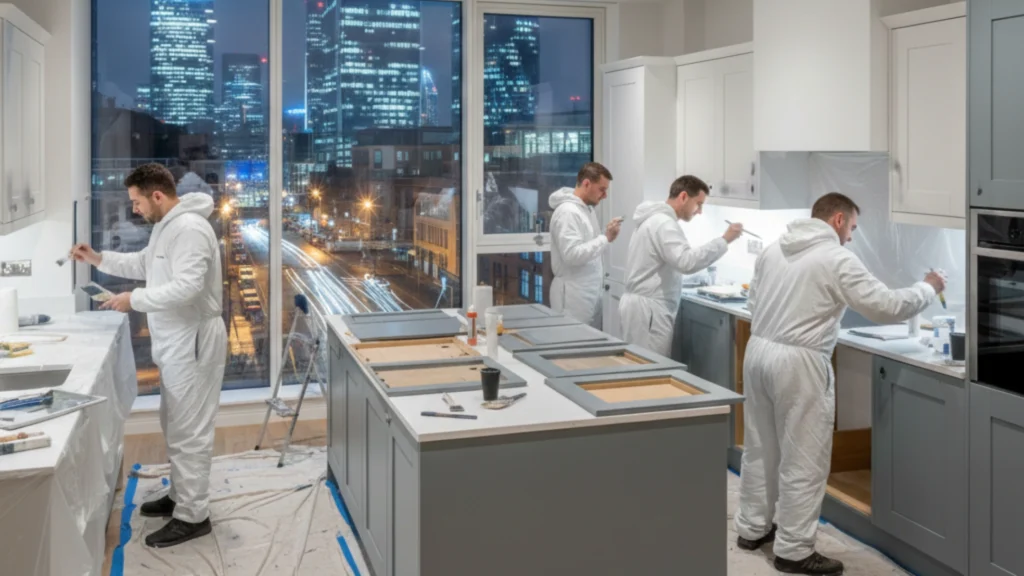
Your kitchen is perfectly functional. Cabinets installed eight years ago. Solid construction. Good quality when they went in. Everything opens, closes, and works exactly as it should. The only problem is they look dated. That warm oak finish that seemed contemporary in 2014 now looks like every budget kitchen fitted during the housing boom of the mid-2000s. You want something modern. Clean. White or grey or navy that transforms the entire kitchen without demolishing perfectly good cabinets and spending thirty thousand pounds you really don’t need to spend.
You’ve seen the YouTube videos. Looks straightforward. Sand them down, stick some primer on, paint them white. Brand new kitchen for a fraction of the cost. Genius. So you do it yourself one Saturday. Buy standard kitchen paint from B&Q. Sand the cabinets with regular sandpaper. Apply primer with a brush. Paint with a roller. Two coats Saturday afternoon, touch ups Sunday morning. By Sunday evening you’ve got white cabinets that look actually quite impressive.
Three weeks later, the paint is peeling along every single edge where the doors close against the frames. Chips appearing across the front faces where pots and pans have knocked against them during normal cooking. The finish feels slightly tacky when you touch it, as though the paint hasn’t properly hardened despite being three weeks old. And the brush marks you didn’t notice initially are now visible across every single cabinet door in diagonal lines that catch the kitchen light every single morning.
Welcome to the expensive disaster of treating cabinet painting like wall painting. Kitchen cabinets aren’t walls. They’re functional surfaces that get touched, knocked, cleaned, and used constantly throughout every single day. Painting them requires completely different products, completely different preparation, and a completely different understanding of what genuinely durable actually means in a kitchen environment.
I’ve spent ten years painting kitchen cabinets across Canary Wharf and Isle of Dogs. Cabinet painting that genuinely transforms a kitchen and lasts years requires understanding that this is specialist work. Not a weekend DIY project. Not a standard wall repaint with the colour changed to white.
Why Cabinet Painting Is Completely Different To Wall Painting
Cabinet painting looks identical to wall painting from a distance. Same colours, same flat surfaces, same general idea of applying paint to something. But the requirements are fundamentally different because cabinets exist in an environment walls simply never encounter.
The existing surface coating actively resists paint adhesion. Factory finished cabinets have a specific protective coating applied during manufacturing. Often an oil-based lacquer or melamine finish designed specifically to protect the wood or MDF underneath. This coating is smooth, sealed, and deliberately non-porous. Paint simply does not bond to it properly without specialist preparation that either removes the coating or creates mechanical grip through it.
Wall paint adheres to plaster because plaster is naturally porous and accepts paint readily. Cabinet surfaces are deliberately sealed to reject exactly what you’re trying to apply. Getting paint to bond permanently requires understanding this fundamental difference and treating it accordingly.
The physical usage is dramatically more demanding. Kitchen cabinet doors get opened and closed dozens of times daily. Surfaces get wiped down after cooking. Items get knocked against them during meal preparation. Hands grip door handles constantly. This level of physical interaction means the paint finish needs to withstand wear that wall paint never encounters throughout its entire life.
Standard emulsion, even good quality kitchen emulsion designed for kitchen walls, deteriorates rapidly under this level of constant physical contact. Cabinet-specific paint systems are formulated to withstand kitchen use for years. Using the wrong product category produces results that look genuinely good initially but fail within weeks of normal kitchen use beginning.
The cure time is significantly longer than drying time. Cabinet paint needs to cure to a genuinely hard finish that resists scratches, chips, and marks from daily use. This curing process takes considerably longer than the paint simply appearing dry to the touch. Putting cabinets back into normal kitchen use before the paint has genuinely cured to full hardness guarantees early damage regardless of how good the product actually is.
Wall paint dries overnight and is considered ready for normal use within a day. Cabinet paint needs significantly longer to achieve the hardness required to withstand kitchen contact. Rushing this single step destroys the entire investment.
The Canary Wharf Cabinet Makeover Opportunity
Canary Wharf and Isle of Dogs flats frequently contain kitchens that are structurally sound but aesthetically dated. Many were fitted during the development boom of the early 2010s with cabinets that were genuinely good quality but styled for that era rather than current tastes.
The financial comparison makes cabinet painting genuinely compelling. Full kitchen replacement in a Canary Wharf flat represents serious expenditure and weeks of disruption. Cabinet painting transforms the identical kitchen in days with a fraction of the cost and disruption. For both homeowners wanting a fresh look and landlords maintaining rental properties, this represents genuine value when done correctly.
But only when done correctly. A cabinet paint job that fails within months doesn’t represent value regardless of how much less it cost than replacement. It represents wasted money requiring repetition. Getting cabinet painting genuinely right produces results lasting years and actually justifies the investment compared to replacement.
The kitchen layouts in E14 flats create specific working challenges. Many Canary Wharf kitchens are galley style or L-shaped with genuinely limited workspace. Removing cabinet doors for painting requires somewhere to lay them flat while drying between coats. Finding space for twenty cabinet doors simultaneously in a flat where every surface is occupied requires planning that standard painters haven’t previously considered.
A Real Project: The Jubilee Gardens Kitchen Transformation
Homeowner near Jubilee Gardens had a kitchen fitted in 2011. Solid Howdens cabinets throughout. Good quality construction, everything working perfectly after over a decade of use. But the oak finish had become visibly dated and the entire kitchen felt like it belonged in the previous decade.
They wanted white cabinets. Clean, modern, contemporary. Exactly what thousands of Canary Wharf residents want their kitchens to look like right now. Replacement was financially painful and entirely unnecessary given the cabinets were structurally perfect.
They hired a painter who did excellent residential work across E14. Genuinely talented with gorgeous wall finishes throughout Canary Wharf flats. But had never painted kitchen cabinets before and didn’t realise this was a fundamentally different discipline to anything they’d previously encountered.
The preparation was completely inadequate for cabinet surfaces. The painter cleaned the cabinets with standard surface cleaner and sanded lightly with fine sandpaper. Perfectly reasonable preparation for standard walls. Completely inadequate for factory-finished cabinet surfaces that are specifically designed to reject paint adhesion.
The existing oak lacquer coating wasn’t properly addressed. Standard primer was applied over it without specialist bonding primer designed to grip sealed factory finishes. The paint system had nothing meaningful to permanently adhere to underneath because the primer itself hadn’t bonded to the existing coating properly.
The product selection was fundamentally wrong. Standard kitchen emulsion was specified. Reasonable assumption if you’ve only ever painted kitchen walls. Kitchen emulsion is designed for kitchen walls, which get splashed and wiped but aren’t physically contacted hundreds of times daily the way cabinet doors are opened, closed, and touched throughout every single day.
Cabinet-specific paint systems exist precisely for this reason. They cure harder, resist chips and scratches specifically, and are formulated for the constant physical contact kitchen cabinets receive throughout normal use. Standard kitchen emulsion simply isn’t durable enough for cabinet surfaces regardless of application quality.
The curing time wasn’t respected at all. Cabinets were reassembled and put back into full kitchen use the following day after the final coat dried to the touch. Within forty-eight hours of normal use, chips were appearing along every door edge where they closed against frames. Within a week, visible wear marks appeared across cabinet fronts where hands gripped them daily.
We stripped everything back and started properly. Thorough specialist degreasing of every cabinet surface removing years of cooking residue and invisible oil contamination. Proper sanding sequence creating mechanical grip on the existing factory coating. Specialist bonding primer designed specifically for sealed factory-finished surfaces, allowed to cure fully before topcoat application.
Cabinet-specific paint system applied in thin, even coats with proper flash time between each coat. Full manufacturer-recommended cure period respected completely before cabinets were reassembled and returned to kitchen use.
The finished kitchen looked genuinely transformed. White cabinets that looked factory finished rather than painted over existing ones. Hard, smooth finish withstanding normal kitchen use without showing wear months later. The homeowner finally had the contemporary kitchen they wanted without demolishing perfectly good cabinets or spending a fraction of replacement cost.
What Specialist Cabinet Painting Actually Requires
Let me be specific about what genuinely understanding cabinet painting means in practice for Canary Wharf kitchens.
Specialist degreasing before anything else happens. Kitchen cabinets accumulate cooking oils, grease, and invisible residue over years of normal use. This contamination prevents paint adhesion regardless of everything else done correctly afterwards. Specialist kitchen degreaser removes this contamination completely. Standard surface cleaner simply doesn’t penetrate what years of cooking have deposited.
Appropriate sanding sequence for the existing coating. Not just sanding. A specific sequence of grit levels that progressively creates mechanical grip on the factory coating without damaging the cabinet structure underneath. Starting too coarse damages the surface permanently. Finishing too fine doesn’t create sufficient grip for the primer to bond. The sequence matters enormously and it’s specific to cabinet surfaces.
Specialist bonding primer designed for sealed surfaces. Standard primer doesn’t bond reliably to factory-finished cabinet coatings. Specialist bonding primers are formulated specifically for smooth, sealed surfaces like factory cabinet finishes. This primer creates the foundation everything else builds on. Without proper bonding at this stage, the entire paint system fails regardless of topcoat quality.
Cabinet-specific topcoat, not kitchen emulsion. Not standard eggshell. Not kitchen wall paint. Cabinet-specific paint formulated to cure hard enough to withstand daily physical contact, resist chips and scratches, and maintain appearance under kitchen conditions for years rather than weeks.
Colour and Finish Decisions That Actually Matter
Choosing the right colour and finish for painted cabinets matters significantly more than most people realise before committing to anything permanent.
White shows everything. White cabinets look stunning when done properly and maintained consistently. They also show every single fingerprint, every splash, every mark from daily kitchen use. In a kitchen where cabinets get touched constantly, white requires more frequent cleaning than darker colours to maintain their appearance long term.
Navy, grey, and sage green all show daily use less obviously than white while still delivering the contemporary look most Canary Wharf residents actually want. Understanding the maintenance implications of each colour choice helps make a decision you’ll genuinely be happy with after two years of living with it rather than one that looked gorgeous initially but becomes tiresome.
The finish level affects both appearance and durability directly. Satin finish offers the best balance between visual appeal and practical durability for most kitchen cabinets. Matt finish looks beautiful but shows fingerprints and marks more obviously than almost any other option. Semi-gloss looks clean but reflects light in ways that can feel clinical rather than warm and welcoming.
Experienced cabinet painters discuss these tradeoffs before committing to anything rather than simply applying whatever finish the client points at without explaining what living with it actually feels like.
What to Demand From Cabinet Painters
If you want your E14 kitchen cabinets painted properly, these specifics protect your investment and ensure the result genuinely lasts.
Specialist cabinet experience specifically. Not general painting experience. Not kitchen wall experience. Specifically cabinet surface painting where preparation, product selection, and curing time all matter enormously. Ask how many kitchen cabinet painting projects they’ve completed in E14 recently.
Cabinet-specific product specification confirmed before work starts. They should specify cabinet-grade paint products, not standard kitchen emulsion. If they’re proposing identical products to what they’d use on kitchen walls, they haven’t understood the fundamentally different requirements cabinet surfaces demand.
Full curing time respected and built into the timeline. Cabinets shouldn’t go back into normal kitchen use until the paint has genuinely cured to full hardness. If they’re suggesting reassembly the next morning after painting, they haven’t understood how cabinet paint actually works or what happens when you rush it.
Specialist degreasing included as the first step automatically. Not optional. Not something you need to remind them about. The single most critical preparation step in any cabinet painting project. If they’re suggesting sanding first without degreasing beforehand, kitchen contamination will prevent adhesion regardless of everything done afterwards.
Get Your Kitchen Actually Transformed
Cabinet painting done properly transforms a kitchen completely without demolishing perfectly good cabinets. Done badly, it wastes money and produces results that deteriorate faster than the original finish they replaced.
We specialise in kitchen cabinet painting across Canary Wharf and Isle of Dogs. We degrease properly, prepare surfaces specifically for cabinet coating adhesion, specify products formulated for kitchen cabinet durability, and respect curing times that guarantee the finish lasts years rather than weeks.
Call for quote now: 07507 226422 Email: hello@havenedge.co.uk Website: www.havenedge.co.uk