
You noticed the water stain three weeks ago. Small yellowish patch in the corner of your living room ceiling, about the size of a dinner plate. Checked with the flat upstairs. Their washing machine had been leaking. They fixed it. The leak stopped. The stain stayed.
Simple enough. Paint over it. Done. Flat looks normal again. Nobody ever needs to know there was ever a stain there in the first place.
You hire a painter. They look up at the ceiling, nod, mix some brilliant white ceiling paint, climb up on a ladder, and start rolling. First coat goes on fine. Second coat goes on. They come down, pack up, leave. You look up. The stain is still there. Faintly visible through two coats of brilliant white emulsion because nobody sealed it before painting over it.
Fine. Annoying but fine. You call them back. They come back, apply a third coat. The stain is still faintly visible but less so. They suggest a fourth coat might do it. You suggest they should have sealed it before painting in the first place. They look genuinely confused by this suggestion, as though sealing water stains before painting over them is some obscure specialist technique rather than the most basic requirement of ceiling painting that has existed since paint was invented.
But the stain is actually the least of your problems. Because while the painter was up there dealing with the stain, they also managed to create lap marks across the entire ceiling. Visible bands where each stroke of the roller overlapped the previous one, creating subtle lines of slightly different sheen running across your living room ceiling like tram tracks.
These lap marks are visible every single time you look up. Which, in a flat where you spend most evenings on your sofa looking at the television, is basically constantly. Your ceiling now looks worse than it did before anyone touched it.
Welcome to the expensive frustration of hiring painters who treat ceilings as an afterthought. Ceiling painting isn’t difficult in the way most people assume. It isn’t just walls but upside down. It’s a completely different discipline requiring specific technique, specific products, and specific understanding of why ceilings fail in ways walls simply don’t.
I’ve spent ten years painting ceilings across Canary Wharf and Isle of Dogs. The number of painters who treat ceiling work as something they knock out quickly before getting to the “real” job of painting walls is genuinely staggering. Ceilings deserve proper attention because they’re the surface everyone looks at most without realising it.
Why Ceiling Painting Is Genuinely Different
Walls and ceilings look like the same job. Same paint, same rollers, same flat surface. But everything about how ceiling painting actually works is different and the consequences of getting it wrong are more visible than most people realise until it happens.
Gravity works against you constantly. Painting walls, gravity helps you. Paint flows downward naturally. Drips run down and get rolled back in. The physics of painting walls are fundamentally cooperative. Painting ceilings, gravity is your enemy. Paint drips down onto your face, your equipment, your furniture, the floor. Too much paint on the roller means drips. Too little paint means uneven coverage requiring multiple passes that create lap marks.
Finding the exact amount of paint on the roller that produces even coverage without dripping requires specific technique that wall painting simply doesn’t demand. Painters who haven’t painted significant amounts of ceiling work haven’t developed this technique and it shows immediately in the result.
Lap marks are the enemy. The single biggest failure mode in ceiling painting is lap marks. These are the subtle bands created when each roller stroke overlaps the previous one and the overlapping area receives slightly more paint, creating a visible difference in sheen between overlapped and non-overlapped sections.
On walls, lap marks are less visible because eye level viewing angle means you’re looking at the surface straight on. On ceilings, you’re looking up at the surface from below at an angle that makes lap marks dramatically more visible than they would be on a wall. A ceiling with lap marks looks unprofessional regardless of how good the colour coverage actually is.
The working angle creates fatigue that degrades quality. Painting a ceiling means holding a roller above your head, pushing paint across a surface while looking up at it, for extended periods. This posture creates fatigue in arms, shoulders, and neck that directly affects technique quality as the session progresses. A ceiling painted in the first hour of work looks noticeably better than the same ceiling painted in the fourth hour because the painter’s technique has degraded through physical exhaustion.
Experienced ceiling painters understand this fatigue dynamic and plan their work accordingly. Inexperienced ceiling painters push through fatigue and produce increasingly poor results as they continue.
Coverage requirements are different. Ceilings collect dust constantly. Light hitting a ceiling from below reveals dust accumulation that makes the surface appear darker than it actually is. This means ceiling paint needs to genuinely cover the surface rather than simply tinting over what’s already there. Two coats of proper ceiling paint produces genuinely even coverage. Two coats of standard wall emulsion on a ceiling often doesn’t because the product wasn’t formulated for the coverage requirements ceilings actually demand.
The E14 Ceiling Challenge
Canary Wharf and Isle of Dogs ceilings present specific complications that intensify every general challenge.
Water damage is extraordinarily common. Riverside location, older building stock, and the density of E14 developments mean water ingress and leak damage affect ceiling surfaces regularly. Previous leaks leave stains, discolouration, and sometimes structural damage to ceiling surfaces that standard painting cannot address without proper treatment first.
Painters who paint over water damage without sealing and treating it first guarantee the stain will reappear through the paint. This isn’t speculation. It happens every single time without exception because water stains contain minerals and residues that bleed through standard paint indefinitely until properly sealed.
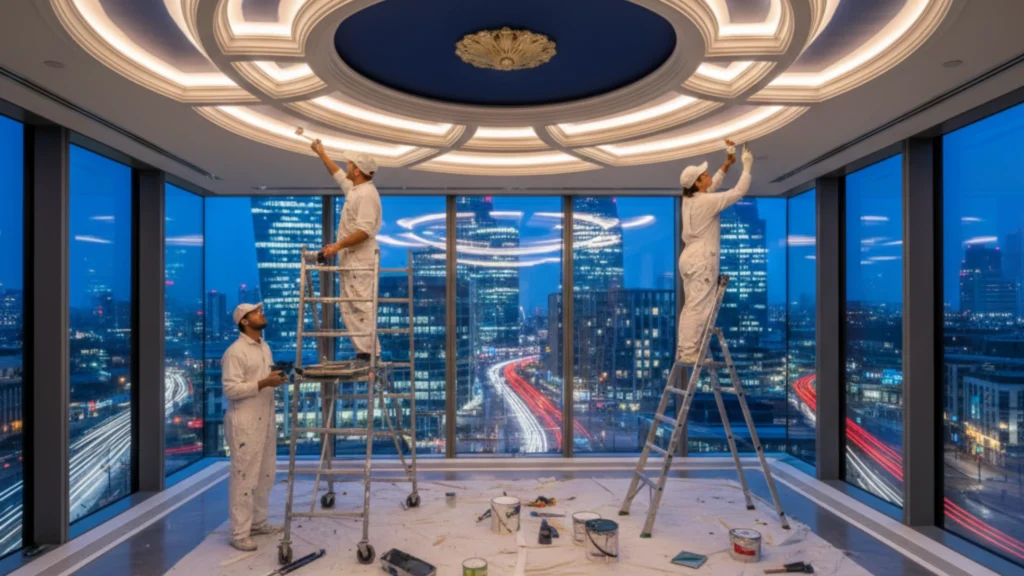
High ceilings in conversion properties demand serious access planning. Warehouse conversions and period property restorations across E14 frequently have ceilings five metres or higher. Painting these ceilings from ladders is genuinely dangerous and physically exhausting in ways that produce poor quality results. Proper access equipment, scaffolding or mobile elevated work platforms, is the only safe and effective method for high ceiling painting.
The light conditions in E14 flats make ceiling imperfections brutally visible. Riverside facing flats with large windows create strong directional light that rakes across ceiling surfaces, casting shadows that reveal every imperfection, every lap mark, every area where coverage isn’t genuinely even. Getting ceiling painting right in E14 flats requires understanding that the light conditions will scrutinise the result far more harshly than in a flat with smaller windows and less directional light.
Artex and textured ceilings remain common in older E14 stock. Textured ceiling coatings from previous decades present specific painting challenges because the texture traps paint unevenly, creates drip points at texture peaks, and requires significantly more paint volume than smooth ceilings to achieve even coverage. Simply rolling standard emulsion over Artex produces blobby, uneven results that look worse than the original texture.
A Real Project: The Canary Wharf West Ceiling Situation
Two bed flat in Canary Wharf West. Gorgeous riverside views. Previous owner had done a lovely job on the walls throughout the flat. Beautiful colours, good finishes, clearly someone who cared about their home. But the ceilings had been completely neglected. Years of dust accumulation, two water stains from previous leak incidents that had been painted over without sealing, and general deterioration that made the entire flat feel shabby despite the lovely walls.
New owner wanted everything brought up to the same standard the walls were already at. Hired a painter specifically to do the ceilings throughout the flat.
The water stains were handled completely incorrectly. Two stains on the living room ceiling, one on the bedroom ceiling. The painter painted over all three with standard ceiling paint without any sealing treatment whatsoever. Informed the client the stains would disappear under two coats of good coverage.
They didn’t disappear. The living room stains were clearly visible through the fresh paint within forty-eight hours of application. The bedroom stain, which was smaller, took a week to reappear but eventually did exactly as predicted.
Water stains contain dissolved minerals and organic material from the water source. These substances migrate through paint layers continuously until properly sealed with specialist stain-blocking primer. No amount of standard ceiling paint covers them permanently without this treatment.
The lap marks across the living room ceiling were immediately obvious. The living room faced east and received strong morning light that raked directly across the ceiling surface. Every single roller stroke overlap was visible as a subtle but unmistakable band of slightly different sheen. The ceiling looked like it had been painted by someone learning the technique rather than someone who had mastered it.
The painter had clearly not developed the specific technique required to maintain consistent paint loading on the roller while working overhead. Each stroke carried slightly different amounts of paint, creating visible variation across the entire surface.
The bedroom Artex ceiling looked worse after painting. Rolling standard emulsion over textured ceiling coating created heavy build-up at texture peaks and pooling in texture valleys. The ceiling looked blobby and amateur rather than simply freshly painted. The texture had been transformed from a neutral background into an obvious visual distraction that drew attention upward every time someone lay in bed.
We remediated everything properly. Water stains treated with specialist stain-blocking primer before any ceiling paint was applied. Both living room stains and the bedroom stain sealed completely before fresh ceiling paint went on. Neither has reappeared since.
Living room ceiling repainted with proper technique maintaining consistent roller loading throughout, working in sections that allowed wet edge maintenance to eliminate lap marks entirely. The morning light now reveals a genuinely even, professional finish rather than the tram track pattern the previous attempt had created.
Bedroom Artex ceiling treated with specialist textured ceiling coating that levels the texture before painting, producing a smooth paintable surface rather than attempting to paint over irregular texture with standard emulsion.
The flat now looks genuinely finished throughout. Walls and ceilings at the same standard for the first time since the previous owner lived there. The previous ceiling painter wasn’t incompetent at general painting. They simply hadn’t developed the specific technique and understanding that ceiling work genuinely demands.
What Proper Ceiling Painting Actually Requires
Let me be specific about what understanding ceiling painting actually means for painters working across E14 flats.
Water stain assessment and treatment before any painting. Every ceiling needs examining for water stains before paint goes anywhere near it. Any stain, regardless of age or apparent severity, needs specialist stain-blocking treatment before ceiling paint is applied. Painting over unsealed water stains guarantees reappearance. This isn’t opinion. It’s basic chemistry of how mineral-laden water stains behave under paint.
Lap mark elimination technique. Maintaining consistent paint loading on the roller while working overhead, keeping a wet edge throughout each section, and working in manageable sections that allow proper blending between strokes. This technique develops through specific ceiling painting experience and cannot be learned from wall painting alone because the physical demands and gravity dynamics are entirely different.
Appropriate product specification. Ceiling paint is formulated specifically for overhead application with thicker consistency that resists dripping while maintaining coverage. Standard wall emulsion on a ceiling produces drips, uneven coverage, and lap marks that ceiling-specific products are engineered to prevent.
Proper access for height. Any ceiling above three metres requires proper access equipment. Ladders become genuinely dangerous for extended overhead work because the physical demands of ceiling painting create fatigue that compromises balance and concentration. Scaffolding or mobile elevated work platforms provide stable, safe working conditions that produce dramatically better results than ladder-based ceiling painting.
Textured ceiling assessment. Artex and similar textured coatings need specific assessment before any painting. Some can be painted successfully with appropriate technique and products. Some benefit from skim coating to level the texture first. Some require specialist treatment before standard ceiling paint will produce acceptable results. Simply rolling standard emulsion over textured ceilings produces universally poor results.
The Ceiling as the Room’s Foundation
People underestimate ceilings because they don’t consciously look at them most of the time. But the ceiling sets the tone for how a room feels more than most people realise until it’s done properly.
A clean, even ceiling makes the entire room feel fresh. Even if the walls haven’t changed, a properly painted ceiling lifts the entire space. Dust accumulation and deterioration on ceilings creates a subtle heaviness that affects how the room feels without people necessarily identifying the ceiling as the source.
A badly painted ceiling drags everything else down. Lap marks, visible stains, blobby texture coverage, all of these pull the eye upward in exactly the wrong way. A ceiling should disappear visually, becoming a neutral backdrop that lets everything else in the room take centre stage. A badly painted ceiling demands attention it should never receive.
The colour choice matters more than people assume. Pure brilliant white isn’t automatically correct for every ceiling. Rooms with warm tones on the walls often benefit from a slightly warm tinted ceiling that harmonises rather than contrasts. A brilliant white ceiling in a room painted in deep warm colours can feel jarring rather than clean. Experienced ceiling painters discuss this rather than simply assuming white is correct.
What to Demand From Ceiling Painters
If your E14 flat needs ceiling work, these specifics protect your investment and ensure the result actually delivers the quality you’re paying for.
Water stain assessment before any painting starts. They should examine every ceiling surface for stains and explain their treatment plan for anything found. If they suggest simply painting over stains without sealing treatment, they don’t understand how water stains behave under paint.
Lap mark prevention technique confirmed. Ask specifically how they prevent lap marks. If they can’t explain their technique clearly, they haven’t painted enough ceilings to have developed one. Lap marks on ceilings are the single most visible painting failure and the one clients notice most consistently.
Ceiling-specific product specification. They should be using paint formulated for ceiling application, not standard wall emulsion applied overhead. If they’re proposing the same products for ceilings as for walls, they haven’t considered the specific requirements overhead painting demands.
Proper access for any ceiling above three metres. Ladders for extended ceiling work create genuinely dangerous conditions and produce poor quality results through fatigue. If they’re planning ladder-based ceiling painting in a high-ceilinged property, the quality and safety are both compromised.
Get Your Ceilings Done Properly
Ceiling painting requires specific technique, specialist products, proper water stain treatment, appropriate access equipment, and genuine understanding of why ceilings fail in ways walls simply don’t. These requirements aren’t optional extras. They’re the baseline for ceiling work that actually looks professional.
We specialise in ceiling painting across Canary Wharf and Isle of Dogs. We treat water stains properly before painting. We use technique that eliminates lap marks. We specify products formulated for overhead application. And we use proper access equipment for high ceilings rather than compromising quality and safety on ladders.
Call for quote now: 07507 226422 Email: hello@havenedge.co.uk Website: www.havenedge.co.uk