
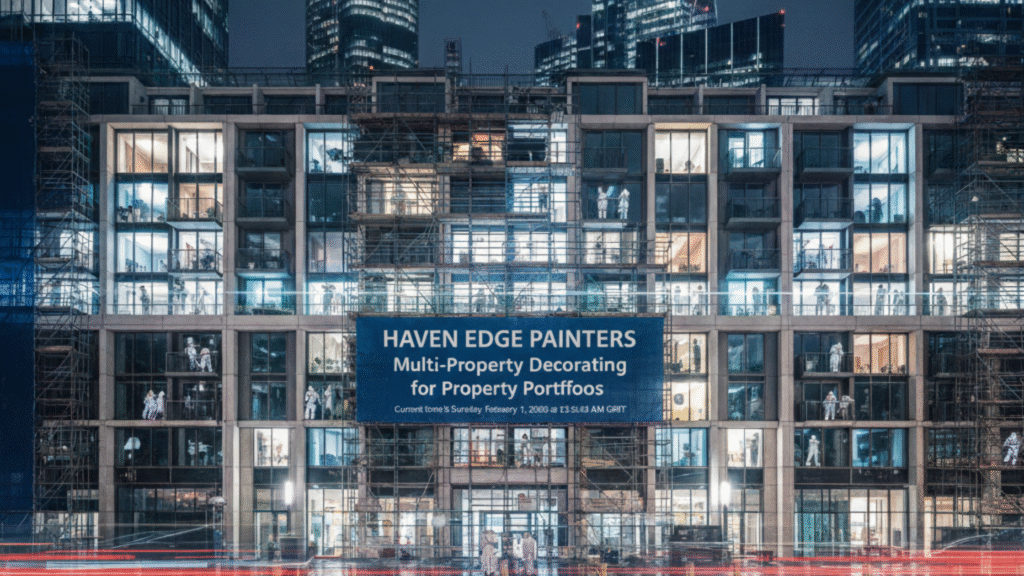
You own eight flats across two Canary Wharf developments. Built your portfolio over six years. Every single one cash flowing nicely. Every single one maintained to a standard that keeps good tenants happy and your estate agent genuinely enthusiastic about working with you.
Then January arrives. Three tenants move out within ten days of each other. Normal churn. Happens every year. You ring around for painters like you always do. Pick whoever’s cheapest and available. Flat one gets painted by a guy from Checkatrade who does beautiful work in sage green but uses a slightly different shade to what was there before because he mixed it from memory rather than matching the specification. Flat two gets painted by someone your neighbour recommended who does stunning work but takes five days instead of the three you needed because he didn’t realise the building management required advance access booking. Flat three gets painted by yet another painter who uses brilliant white everywhere regardless of what was previously there because “it’s a rental, white’s fine.”
Three flats. Three different painters. Three different whites. Three different preparation standards. Three different timelines. Three different levels of building management coordination.
Your estate agent shows all three to prospective tenants on the same day. The inconsistency is immediately visible even to someone who isn’t looking for it. Flat one looks lovely but slightly different to how your other flats look. Flat two looks fine but took longer than necessary because access delays ate into your void period. Flat three looks cheap because brilliant white without any warmth or consideration makes rental flats look institutional rather than welcoming.
Welcome to the expensive chaos of painting property portfolios without a single painter who understands what portfolio consistency actually means and why it matters financially.
I’ve spent ten years painting property portfolios across Canary Wharf and Isle of Dogs. The difference between a portfolio that looks professionally managed and one that looks like a collection of random flats painted by whoever happened to be available is entirely down to whether the owner treats painting as a portfolio decision or a series of individual ones.
Why Portfolio Painting Requires Different Thinking
Painting one rental flat is straightforward. Paint it. Hand it back. Move on. Painting eight flats across a portfolio is fundamentally different because every decision you make on one property affects how your entire portfolio presents to the market.
Consistency is a financial asset, not just an aesthetic preference. When a prospective tenant views multiple flats in your portfolio, or when an estate agent shows your properties alongside competitors, consistency communicates professionalism. It tells the market that someone is actively managing these properties to a standard rather than simply reacting to problems as they appear.
Inconsistency communicates the opposite. It suggests each property is being dealt with independently, reactively, without any overarching standard. This impression directly affects tenant quality and rental rates achievable.
The economics of scale work entirely differently. Eight flats painted individually by eight different painters means eight separate quotes, eight separate negotiations, eight separate building management coordination exercises, and eight separate quality outcomes. Eight flats painted by one painter who understands your portfolio means one relationship, one consistent specification, one building management coordination process, and one predictable quality standard.
The cost per flat might be similar either way. The total cost including your time, your void periods, and the consistency of your presentation is dramatically different.
The maintenance cycle becomes predictable when managed properly. Property portfolios have painting cycles. Some flats need repainting every two years. Some every three. Some only need touching up between tenants rather than full repaints. A painter who understands your portfolio tracks this cycle and flags when properties are approaching repaint time rather than waiting for you to notice deterioration.
Individual painters have no visibility of your broader portfolio. They paint what you put in front of them and disappear. Portfolio painters proactively manage the maintenance cycle across your entire holding.
Tenant experience creates word of mouth across your portfolio. Good tenants talk to each other, especially in the same building or nearby developments. A tenant in one of your flats who has a genuinely positive experience tells friends. A tenant who moves into a flat that looks rushed or inconsistent tells friends a different story entirely.
Portfolio consistency means every tenant experiences the same standard regardless of which flat they moved into. This creates consistent word of mouth that benefits your entire holding rather than mixed messages that confuse prospective tenants.
The E14 Portfolio Challenge
Canary Wharf and Isle of Dogs portfolios present specific complications that make consistent painting across multiple properties genuinely difficult without specialist understanding.
Each building has different management requirements. A portfolio spread across Canary Wharf might include properties in five or six different managed developments. Each building management company has different access protocols, different documentation requirements, different working hour restrictions, different service lift booking procedures.
Painters who work across multiple buildings in E14 regularly know these requirements intimately. Painters hired individually for each property learn them expensively through trial and error every single time.
The void period economics multiply across a portfolio. One flat with a ten day void period because painting took longer than expected costs you one week of lost rent. Five flats with extended void periods simultaneously because painters kept overrunning costs you five weeks of lost rent across your portfolio. The financial impact of painting delays compounds dramatically at portfolio scale.
Portfolio painters understand this multiplication and plan accordingly. Individual painters only see their own single flat and don’t consider the broader financial impact of delays.
The tenant presentation standard is higher than individual landlords realise. Estate agents showing your portfolio alongside competitors are comparing your properties against professionally managed portfolios that look consistently excellent. If your flats look inconsistent, the estate agent subtly steers prospective tenants toward competitors whose properties present more professionally.
This isn’t about individual flat quality. It’s about how your entire portfolio communicates professionalism to the market simultaneously.
The specification knowledge compounds over time. A painter who has painted ten of your flats knows exactly what works in your specific buildings, which products perform best in E14 conditions, which colours work across your portfolio, and how to prepare surfaces in your specific properties most efficiently.
This accumulated knowledge makes each subsequent flat faster, cheaper, and better than the last. Starting fresh with a new painter each time means paying the learning cost repeatedly.
A Real Situation: The Crossharbour Portfolio
Property investor owned twelve flats across three Crossharbour developments. Had been managing painting reactively for three years, hiring whoever was available and cheapest each time a flat needed work.
The inconsistency had become genuinely expensive. Estate agent had mentioned multiple times that the portfolio presentation was inconsistent. Some flats looked beautiful. Some looked adequate. Some looked like they’d been painted by someone who didn’t care particularly much about the result.
Prospective tenants viewing multiple flats on the same day noticed the inconsistency immediately. Two flats that were both perfectly habitable looked completely different in quality and presentation despite being in the same development. This was actively hurting rental rates achievable because tenants assumed inconsistency meant the landlord wasn’t invested in maintaining the properties.
The void period situation was costing real money. Each time a flat needed painting, the investor rang around for painters. Finding someone available within the void period was increasingly difficult because E14 painters were genuinely busy. Average void period had crept up to twelve days partly because painting wasn’t happening fast enough.
Twelve flats with twelve days average void period each year meant roughly one hundred and forty four days of lost rental income annually across the portfolio. Even at modest Canary Wharf rental rates, this represented significant lost revenue.
The maintenance tracking was entirely reactive. The investor only thought about painting when a tenant moved out or when deterioration became obviously visible. Nobody was flagging that flat four needed repainting before the next tenant moved in, or that flat nine’s bathroom ceiling was approaching the point where maintenance painting would be far cheaper than waiting for full deterioration.
We took over the entire portfolio. First step was assessing all twelve flats individually. Establishing which needed immediate repainting, which needed touching up, which could wait another year. Creating a consistent colour specification that worked across all twelve properties regardless of which development they were in.
The standardisation transformed everything. Consistent colours across the portfolio meant every flat looked like it belonged to the same professionally managed holding. Estate agent noticed immediately. Prospective tenants noticed immediately. Rental rates achieved started creeping upward because the presentation communicated genuine investment and care.
The maintenance cycle became predictable. We tracked every flat’s painting history and flagged approaching repaint dates proactively. The investor stopped being surprised by painting needs and started planning and budgeting them in advance. Void periods dropped because painting was never the bottleneck anymore.
The economics worked out dramatically better. Total annual painting spend across the portfolio actually decreased despite using higher quality products consistently. Fewer emergency turnarounds because maintenance was proactive rather than reactive. Shorter void periods because painting happened within planned timelines rather than whenever a painter happened to be available.
The investor hadn’t been doing anything wrong. They simply hadn’t considered that painting twelve flats as twelve individual problems was fundamentally less efficient than painting twelve flats as one portfolio managed to one standard.
What Portfolio Painting Actually Requires
Let me be specific about what understanding property portfolios actually means for painters working across multiple sites.
Portfolio specification development. Before any painting happens, establish what consistent presentation looks like across your entire holding. Which colours work across different building types. Which products perform best in E14 conditions specifically. Which preparation standards apply universally.
This specification becomes the foundation everything else builds on. Individual painters reinvent this every time. Portfolio painters develop it once and apply it consistently.
Proactive maintenance cycle tracking. Understanding when each property in your portfolio last had work done, what condition it’s in currently, and when it’s approaching the point where maintenance intervention prevents expensive deterioration. Flagging this to the portfolio owner before problems become visible saves money consistently.
Individual painters have zero visibility of your broader portfolio condition. Portfolio painters actively monitor it.
Building management relationship management across multiple sites. Knowing the access protocols, documentation requirements, and working restrictions across every building in your portfolio. Coordinating access across multiple properties simultaneously when needed. Handling building management communication without the portfolio owner chasing anything.
This relationship management across multiple buildings is genuinely valuable and impossible to replicate by hiring individual painters for each property.
Volume efficiency that reduces cost per property. Painting multiple properties in sequence with the same specification means materials are ordered in bulk, equipment is already on site, and the learning curve for each building only happens once. This efficiency reduces the effective cost per flat while maintaining or improving quality.
Individual painters quote each flat as a standalone job. Portfolio painters achieve genuine economies of scale.
Consistent quality assurance across every property. Every flat in your portfolio deserves the same standard regardless of size, location within E14, or how long since it was last painted. Portfolio painters maintain this consistency automatically because they’re working to one specification across everything.
Individual painters deliver whatever standard they happen to work to, which varies between painters and between jobs.
The Specification Document as a Portfolio Asset
A written painting specification for your property portfolio is genuinely one of the most valuable documents a portfolio investor can own.
It makes every future turnaround predictable. When a tenant moves out, the specification tells exactly what needs doing, what products to use, what colours to apply, and what standard to achieve. No decisions needed. No negotiation required. Just execution to a known standard.
Without a specification, every turnaround involves fresh decisions, fresh quotes, and fresh uncertainty about what the result will look like.
It protects your portfolio presentation permanently. Any painter working on your portfolio, whether your regular portfolio painter or a one-off replacement when needed, works from the same specification. Your portfolio looks consistent regardless of who physically does the painting.
Without a specification, consistency depends entirely on using the same painter every time, which isn’t always possible.
It supports estate agent conversations with evidence. When your estate agent says your portfolio presents professionally, having a written specification demonstrating consistent standards across every property supports that positioning with concrete evidence rather than just hoping the results speak for themselves.
What Portfolio Investors Should Demand
If you own multiple E14 rental properties, these specifics protect your portfolio value and presentation.
Portfolio-level thinking, not individual flat thinking. They should understand that painting one of your flats affects how your entire portfolio presents. If they treat every flat as a completely separate job with no consideration for consistency, they don’t understand portfolio management.
Specification development as the first step. They should help you establish consistent standards across your portfolio before painting anything. If they suggest simply painting each flat as it comes up without establishing portfolio-wide consistency first, they’re not thinking at portfolio scale.
Proactive maintenance flagging. They should tell you when properties are approaching repaint time before you notice deterioration. If you’re always discovering painting needs reactively when problems become visible, nobody is tracking your portfolio’s maintenance cycle.
Building management coordination handled completely. Across every building in your portfolio. Without you chasing anything. If you’re making calls to arrange access for painters in multiple buildings, the painter isn’t experienced enough with E14 managed properties at portfolio scale.
Genuine economies of scale. Painting multiple properties consistently should cost less per flat than painting them individually with different painters. If the per-property cost isn’t improving as the relationship develops, the efficiency benefits of portfolio painting aren’t being realised.
Get Proper Portfolio Management
Property portfolio painting in E14 requires understanding consistency as a financial asset, specification development across multiple property types, proactive maintenance cycle management, building management coordination across multiple sites, and the genuine economies of scale that portfolio painters deliver.
We manage painting across property portfolios throughout Canary Wharf and Isle of Dogs. We develop consistent specifications, track maintenance cycles proactively, coordinate building management across multiple developments, and deliver the same standard to every flat in your holding regardless of size or location.
Call for quote now: 07507 226422 Email: hello@havenedge.co.uk Website: www.havenedge.co.uk