
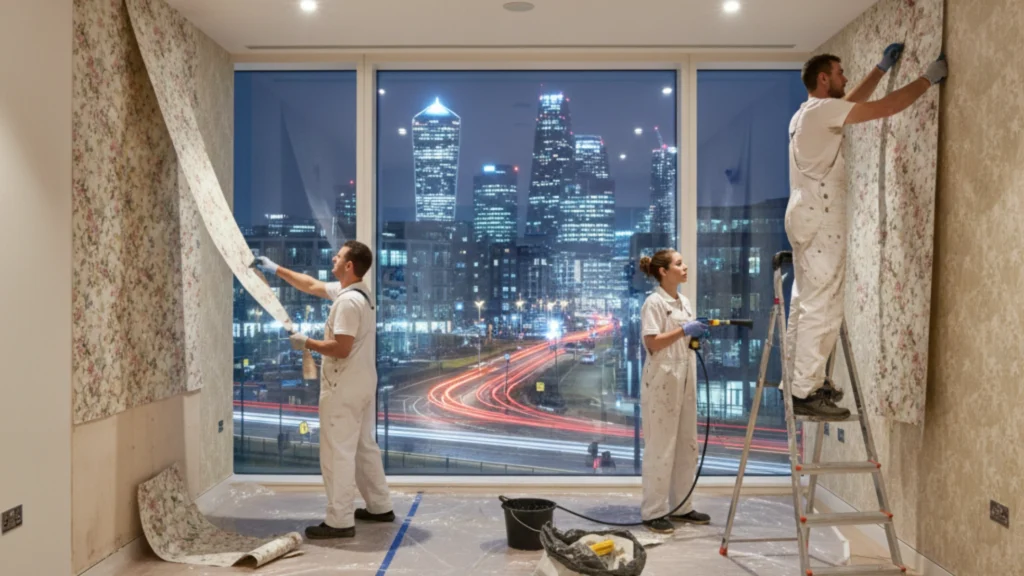
You’ve decided the wallpaper has to go. Reasonable decision. The previous owner chose something that made sense in 2016 but now looks dated and you want fresh painted walls. Simple job. Peel it off, paint over it. Weekend sorted.
Saturday morning you fill a bucket with water, grab a sponge and a scraper from B&Q, score the wallpaper with a scoring tool, soak it thoroughly, and start peeling. First strip comes off beautifully. Satisfying long strip peeling away from the wall in one clean sheet. You’re actually enjoying this.
Second strip tears into three pieces. You soak it more. The middle section comes off but leaves a sticky residue on the wall that won’t budge. Third strip reveals another layer underneath. Lining paper. Nobody told you there was lining paper underneath. Now you’ve got two layers to remove instead of one and you’ve only done three strips of the top layer.
By Sunday afternoon you’ve stripped roughly half the living room. The walls look like a battlefield. Chunks of plaster missing where the scraper gouged too aggressively. Sticky adhesive residue covering everything in patches. The lining paper underneath has torn in multiple places, leaving sections of bare plaster exposed alongside sections still covered in lining paper that won’t come off without damaging the plaster behind it.
You step back and look at the walls. They are not paintable. Not even close. Painting over this mess would look worse than the original wallpaper. You’ve spent an entire weekend creating a problem significantly more expensive to fix than the one you started with.
Welcome to the expensive aftermath of DIY wallpaper removal that didn’t account for what actually exists underneath decorative wallpaper in a typical Canary Wharf flat. Wallpaper removal isn’t peeling paper off walls. It’s understanding what layers exist, how to remove each one without damaging what’s underneath, treating residue properly, and preparing the bare surface to a standard that actually accepts new paint or wallpaper.
I’ve spent ten years stripping wallpaper and preparing surfaces across Canary Wharf and Isle of Dogs. The damage caused by amateur wallpaper removal attempts is one of the most common and expensive problems we fix across E14 flats because most people genuinely don’t realise how much exists underneath decorative wallpaper until they start pulling at it.
Why Wallpaper Removal Is More Complicated Than It Looks
Stripping wallpaper looks straightforward from the outside. Soak, scrape, peel. Simple enough that thousands of homeowners attempt it every weekend across Britain. But what actually exists on E14 flat walls is significantly more complex than one layer of decorative wallpaper and a painted wall underneath.
Multiple layers are the norm, not the exception. Most Canary Wharf flats that have been owned by multiple people over the years have accumulated several layers of wallpaper and paint on top of each other. Previous owners wallpapered over paint. Other previous owners painted over wallpaper. Someone at some point lined the walls with lining paper before hanging decorative wallpaper on top. Stripping the top layer reveals something underneath that requires completely different removal technique to what you just used on the layer above it.
Understanding the layer structure before starting determines the entire approach. Stripping blindly hoping for bare plaster underneath produces exactly the kind of damage described above because each layer requires different treatment.
The adhesive residue problem is genuinely persistent. Wallpaper adhesive bonds to wall surfaces and dries into a sticky, semi-transparent coating that resists removal with water alone. Old adhesive, particularly from wallpaper hung more than five years ago, becomes increasingly difficult to remove completely because it hardens and bonds more firmly to the plaster surface over time.
Painting over adhesive residue produces a finish that looks patchy, uneven, and slightly tacky in places because the residue affects how paint absorbs and dries on the surface. The residue must be completely removed or properly treated before any new surface treatment goes on.
Plaster damage during removal is almost inevitable without proper technique. Aggressive scraping removes wallpaper efficiently but gouges the plaster underneath simultaneously. The scoring tool that breaks through wallpaper to allow water penetration also scores the plaster if pressed too firmly. Even careful removal inevitably damages plaster in areas where adhesive has bonded particularly firmly and the paper won’t release without force.
Professional strippers understand exactly how much pressure to apply at each stage. Amateur attempts consistently apply too much force because they’re trying to remove paper quickly rather than carefully, producing plaster damage that requires significant repair before the surface is paintable.
Lining paper underneath changes everything. Lining paper was hung specifically to create a smooth surface for decorative wallpaper to go on top of. It’s thinner than decorative wallpaper, adheres differently, and removes differently. Finding lining paper underneath decorative wallpaper means a second complete removal process using different technique to what removed the top layer.
Some lining paper comes off cleanly with water and careful scraping. Some has bonded so firmly to the plaster over years that removing it without plaster damage is genuinely impossible. In these cases, the lining paper stays and gets skimmed over rather than removed, which is a completely different solution to what most people expect when they imagine stripping wallpaper.
The E14 Wallpaper Removal Challenge
Canary Wharf and Isle of Dogs flats present specific wallpaper removal complications that intensify every general difficulty.
The layer history in E14 developments is often extensive. Properties that have changed hands multiple times since the 1990s or early 2000s have accumulated significant decoration history on their walls. Each owner added something without necessarily removing what was underneath. By the time a current owner wants bare walls, the layer structure might include three or four separate decoration cycles stacked on top of each other.
Professional strippers assess this layer structure before starting. Amateur attempts discover it progressively, each new layer requiring different technique and adding unexpected time and complexity.
The plaster quality underneath varies significantly between developments. Some E14 developments have genuinely good quality plaster that withstands removal attempts without significant damage. Some have thinner, more fragile plaster that gouges easily during removal. Some have areas where plaster has already been repaired multiple times, creating patches of different hardness and thickness that respond completely differently to removal technique.
Understanding plaster condition before starting determines how aggressively paper can be removed without causing damage that costs more to repair than the removal itself.
The managed building situation creates time constraints. Wallpaper removal creates significant mess. Wet paper, adhesive residue, water dripping down walls onto floors, all of this needs containing and cleaning up within the flat. In managed buildings where common areas must remain clean and undamaged, containing this mess becomes an additional consideration that professional strippers handle automatically.
A Real Project: The Rope Walk Removal Nightmare
Two bed flat on Rope Walk, Limehouse. Previous owner had wallpapered throughout the flat approximately seven years earlier. Beautiful pattern when it went up. Now dated and the new owner wanted clean painted walls throughout.
They attempted removal themselves on the first wall. Got roughly a third of the way before discovering the situation was significantly more complex than anticipated and calling us.
The layer structure was genuinely unexpected. Top layer was the decorative wallpaper the previous owner had hung seven years ago. Underneath that was lining paper. Underneath the lining paper was a layer of paint. Underneath that paint was older wallpaper from a previous decoration cycle that had simply been painted over rather than removed. Four layers deep on a single wall.
The homeowner had been stripping the top decorative wallpaper expecting bare plaster underneath. Finding lining paper was the first surprise. Discovering painted-over older wallpaper underneath the lining paper was the second surprise. Neither surprise was pleasant because both significantly increased the complexity and time required.
The adhesive residue situation was severe. Seven years of adhesive bonding meant the residue had hardened into a coating that water alone couldn’t dissolve. The areas the homeowner had stripped left sticky patches across the exposed surface that wouldn’t respond to sponging or scraping without gouging the plaster underneath.
The older wallpaper layer underneath the lining paper had its own adhesive situation, older and harder than the top layer’s residue, creating a second layer of adhesive contamination once both upper layers were removed.
The plaster damage from their removal attempt needed significant repair. Scraping the decorative wallpaper off the sections they’d completed had gouged the plaster in multiple areas. The scoring tool had cut into the plaster surface in lines visible across the stripped section. Two areas where adhesive had bonded particularly firmly had been scraped so aggressively that chunks of plaster had come away entirely, exposing the render underneath.
We stripped and prepared everything properly. Starting from the sections the homeowner hadn’t touched, we assessed the full layer structure before removing anything. Understanding exactly what existed on the wall determined our removal sequence and technique for each layer.
Top decorative wallpaper removed with appropriate soaking time and gentle scraping technique that released the paper without gouging the lining paper underneath. Lining paper assessed individually in each section. Where it released cleanly, it was removed. Where it had bonded too firmly to the plaster to remove without damage, it was left in place for skimming over later.
Older painted-over wallpaper underneath removed using specialist stripper solution rather than water alone because the age of this layer meant water couldn’t penetrate the paint seal over it effectively.
Adhesive residue treated with specialist adhesive remover throughout all stripped sections. Complete removal of all residue before any surface preparation began because adhesive contamination under new paint or wallpaper produces permanent problems regardless of how good the surface treatment actually is.
The homeowner’s plaster damage repaired properly. Gouged areas filled, sanded flush, and primed to match surrounding surfaces. The entire wall surface brought to genuinely smooth, clean, properly prepared condition before any new decoration was considered.
The finished walls looked like brand new plastered surfaces. Clean, smooth, ready for whatever the owner wanted to do with them. The entire process took three days of professional work. The homeowner’s weekend attempt had produced damage that would have cost more to repair than the entire professional removal and preparation combined.
What Professional Wallpaper Removal Actually Requires
Let me be specific about what genuinely understanding wallpaper removal means in practice for E14 flats.
Layer structure assessment before any removal begins. Peeling back a small section in an inconspicuous corner reveals what actually exists underneath the decorative wallpaper. How many layers. What types. What condition. This assessment determines the entire removal approach before a single strip of decorative wallpaper is touched on the main walls.
Amateur removal starts stripping immediately and discovers layers progressively. Professional removal assesses first and plans accordingly. The difference between these approaches is the difference between controlled removal and the battlefield result described at the beginning of this post.
Appropriate soaking technique for each layer type. Decorative wallpaper, lining paper, and older wallpaper underneath all require different soaking times and different water application methods. Too little soaking means the paper tears rather than releasing cleanly. Too much soaking saturates the plaster underneath and weakens it, making damage during scraping almost inevitable.
Professional strippers adjust soaking technique to each specific layer rather than applying one method to everything and hoping it works.
Adhesive residue treatment as a separate critical stage. After all wallpaper layers are removed, adhesive residue treatment is its own distinct process requiring specialist products and thorough application throughout every stripped surface. This stage cannot be rushed or skipped because adhesive residue under new paint creates permanent problems that no amount of topcoat corrects.
Plaster repair and surface preparation to paintable or wallpaperable standard. Once stripping and residue treatment are complete, the bare surface needs assessment and repair before any new decoration goes on. Gouges filled. Cracks sealed. Uneven areas skim coated. The surface brought to genuinely smooth, clean condition that actually accepts new paint or wallpaper properly.
The Lining Paper Decision
Lining paper found underneath decorative wallpaper presents a specific decision that most homeowners haven’t previously encountered and find genuinely confusing.
Sometimes removal is the right approach. Lining paper that releases cleanly from the plaster with appropriate soaking and gentle scraping can be removed completely, leaving bare plaster underneath for preparation and new decoration.
Sometimes leaving it and skimming over is better. Lining paper that has bonded so firmly to the plaster that removal would cause significant damage is often better left in place. Specialist skim coating over the lining paper creates a smooth, paintable surface without the damage that forced removal would create.
The decision depends on the specific bond condition in each section. Some sections of lining paper in the same room release easily while others have bonded permanently. Professional assessment determines which approach suits each section rather than attempting one method throughout and discovering it doesn’t work halfway through.
What to Demand From Wallpaper Removal Specialists
If your E14 flat needs wallpaper stripped, these specifics protect your walls and your budget simultaneously.
Layer structure assessment before any removal starts. They should check what exists underneath before touching the main walls. If they’re planning to strip everything and discover what’s underneath as they go, the damage risk is significantly higher than necessary.
Adhesive residue treatment included as a standard stage. Not optional. Not something you need to remind them about. Adhesive residue under new decoration creates permanent problems. If they’re planning to paint directly over stripped walls without treating residue first, the finish will show contamination regardless of paint quality.
Plaster repair included in the scope before any new decoration. Bare plaster after wallpaper removal is almost never paintable without repair. If they’re quoting wallpaper removal without including surface preparation and repair to paintable standard, the quote isn’t actually complete.
Specialist products for stubborn adhesive and old layers. Water alone doesn’t remove adhesive residue from wallpaper hung more than a few years ago. Specialist stripper solutions exist specifically for persistent adhesive and old wallpaper layers. If they’re planning to use water for everything, old adhesive will remain on the surface regardless of how thoroughly they scrub.
Get Your Walls Actually Clean
Wallpaper removal done properly leaves genuinely clean, smooth, paintable walls ready for whatever you want to do next. Done badly, it leaves damaged plaster, adhesive residue, and a surface that looks worse than the wallpaper it replaced and costs significantly more to fix than professional removal would have cost originally.
We specialise in wallpaper removal and surface preparation across Canary Wharf and Isle of Dogs. We assess layer structures before starting. We treat adhesive residue completely. We repair plaster damage. And we prepare surfaces to genuinely paintable or wallpaperable standard before we consider our job finished.
Call for quote now: 07507 226422 Email: hello@havenedge.co.uk Website: www.havenedge.co.uk