
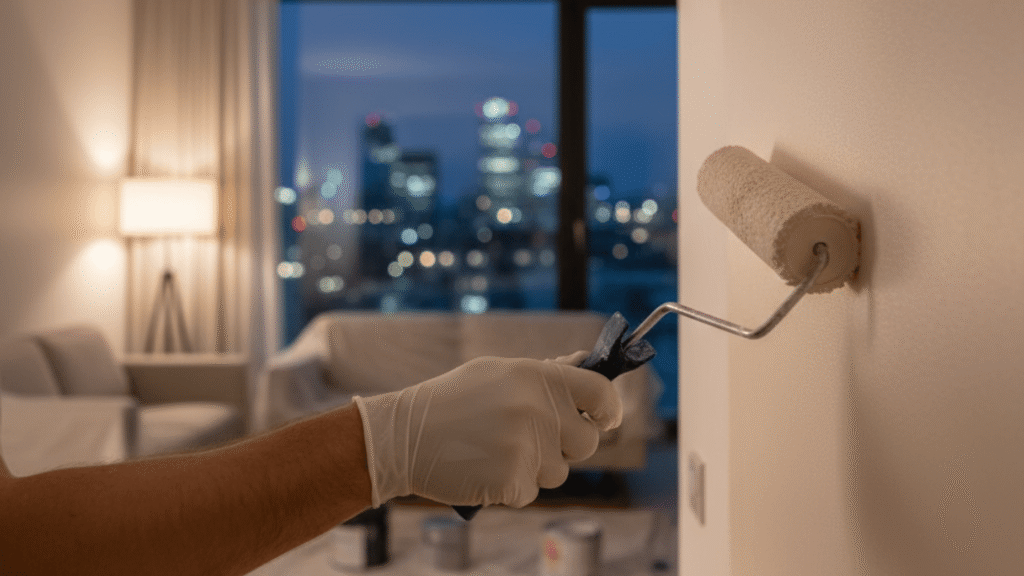
You’ve just completed on your shiny new Isle of Dogs flat. The developer assured you it’s ready to move into. The walls look perfect. Smooth plaster, no cracks, exactly what you expect from a new build. So you hire the cheapest painter you can find because, well, it’s brand new. How hard can it be?
Your painter turns up and immediately starts slapping paint on. No questions about what’s underneath. No checking whether the plaster’s properly cured. No discussion about whether you need mist coats or specific primers for new substrates. Just straight onto painting because “it’s all new, it doesn’t need any prep.”
Fast forward three months. Your beautifully painted walls are developing these odd patches. Bits where the paint’s started peeling away from the plaster. Areas where you can see the joins between plasterboard sheets showing through. One wall has developed this weird bubbling effect that gets worse every week.
You call your painter. They say it must be a problem with the developer’s work, not their painting. You call the developer. They say the warranty explicitly states you must use appropriate painting methods for new plaster, and clearly you didn’t, so it’s not covered. You’re now stuck between two parties blaming each other while staring at walls that look worse than before you painted them.
Welcome to the expensive reality of treating new build painting like standard redecoration work. Different substrate, different requirements, different techniques. Get it wrong and you void warranties, cause problems, and waste money fixing what should have been done right first time.
I’ve spent ten years painting new developments across Isle of Dogs and Canary Wharf, and the number of people who don’t understand new builds need specialist approaches is staggering.
Why New Builds Are Different
Let me be very clear about something. New build painting is not easier than redecorating older properties. It’s different, with its own specific challenges that catch regular painters completely off guard.
The plaster is fresh. New plaster contains moisture that needs to escape. Paint the wrong way and you trap that moisture, causing adhesion failure, bubbling, and long term problems. New plaster also has different porosity than aged plaster, affecting how paint adheres.
Most painters treat all plaster the same. Apply standard paint in standard ways. On new builds, this causes failures that appear weeks or months later when the trapped moisture finally forces its way out.
Developer specifications matter legally. Your new build comes with warranties from the developer and NHBC or similar building warranty providers. These warranties often include specific requirements for decorating. Use wrong methods or wrong products and you void coverage.
Regular painters don’t think about this. They paint how they’ve always painted. Then when problems arise, you discover you’re not covered because you didn’t follow specifications you didn’t know existed.
Snagging isn’t finished. Even in supposedly complete new builds, there are often minor imperfections. Small plaster blemishes, slight settlement cracks, areas where finishing wasn’t perfect. Paint over these without addressing them and they become permanent visible features.
Professional new build painters inspect first and identify snagging issues before painting. Cowboy painters start immediately and lock in problems.
The construction sequence matters. New developments often have final construction touches happening while you’re trying to move in. Painting too soon, before all works are complete, means dust contamination, damage from other trades, and wasted effort.
Experienced new build painters understand construction timings and advise on optimal painting schedules. Regular painters just come when you book them, regardless of whether conditions are actually suitable.
The Isle of Dogs New Build Challenge
E14’s new developments present specific challenges beyond generic new build issues.
The riverside factor again. New builds on Isle of Dogs are next to the Thames. Fresh plaster in riverside locations needs even more attention to moisture management than inland new builds. The ambient humidity affects curing times and paint application.
Painters who don’t understand E14’s environment apply standard new build techniques that work in dry suburban areas but fail in humid riverside conditions.
Developer variety means specification variety. Ballymore developments have different specifications than Berkeley Homes have different specifications than smaller developers. Each has their own requirements for painting to maintain warranties.
Professional E14 new build painters know these developers and their specific requirements. Regular painters treat all new builds identically and potentially void multiple warranties.
The quality range is massive. Luxury new builds in Canary Wharf have different finishing standards than affordable housing developments. Each requires different approach and different quality expectations.
Painters who work mainly on budget properties struggle with luxury finishing standards. Painters who work mainly on luxury properties sometimes overbid and over specify for budget developments.
Access during snagging periods. Many Isle of Dogs developments retain construction access for months after initial handovers for snagging and remedial work. Your painter needs to coordinate with ongoing developer activity.
Experienced new build painters navigate this smoothly. Regular painters get frustrated by construction access limitations they didn’t anticipate.
A Real Example: The Royal Wharf Disaster
Here’s a situation that perfectly demonstrates why new build painting needs specialists.
Client bought a flat in a large Isle of Dogs development. Completed in winter. Developer handover was relatively clean but client wanted to redecorate immediately in their own colours before moving furniture in.
They hired a painter who specialized in period property restoration. Beautiful work, excellent reviews, decades of experience. Seemed perfect. But all that experience was with aged plaster in Victorian and Edwardian properties.
The mistakes started immediately. The experienced painter assessed the walls, declared the plaster “perfect, ready to paint,” and started applying their standard high quality paint system directly to the new plaster.
No mist coat. No consideration that new plaster needs sealed differently than aged plaster. Just straight to final paint because the surface looked fine.
Week one after completion: Paint looked gorgeous. Client was delighted. Moved furniture in. Everything seemed perfect.
Week three: Small patches started appearing where paint seemed slightly different. Barely noticeable but client was concerned.
Week six: Those patches had grown. Close inspection showed paint was losing adhesion to the plaster underneath. Starting to peel at edges.
Week ten: Significant areas of paint failure across multiple walls. The paint was literally coming away from the plaster in sheets in some places.
The investigation: Turned out the new plaster hadn’t fully cured when painted. It still contained moisture that needed to escape. The high quality paint system the experienced painter used created an impermeable layer that trapped that moisture.
As the moisture tried to escape over following weeks, it pushed the paint away from the substrate. The better the paint adhesion to itself, the worse the problem, because it came away as complete sheets rather than just flaking.
The warranty situation: The developer warranty specifically required mist coats on new plaster before final decoration. The client hadn’t known this. The painter hadn’t known this. The work didn’t comply with warranty requirements. Problem wasn’t covered.
We stripped and redid everything. Checked the plaster was fully dry. Applied proper mist coat to seal the new plaster appropriately. Allowed proper drying time. Then applied final coats using suitable products for new substrates.
The experienced period property painter wasn’t bad at their job. They were excellent at period property work. They just had zero experience with new plaster requirements and didn’t know what they didn’t know. The client paid twice, once for work that failed and once for work done properly.
That’s why new build experience specifically matters. General painting experience isn’t enough.
What New Build Painting Actually Requires
Let me be very specific about what’s different when painting new developments.
Plaster moisture assessment. Before any paint goes near new plaster, check it’s properly dried. This takes weeks or months depending on conditions. Paint too soon and you guarantee problems.
Professional new build painters know how to assess readiness. We know the signs of insufficiently cured plaster. We delay if necessary rather than causing failures.
Mist coats are mandatory. New plaster needs sealed with thinned paint applied as mist coat before final painting. This manages porosity and provides proper base for subsequent coats.
Regular painters often skip this or do it incorrectly. It seems like pointless extra work if you don’t understand the substrate.
Developer specification compliance. Check what the warranty requires. Many NHBC warranties include specific decorating requirements. Follow them or void coverage.
Professional painters ask about warranties and obtain specifications before starting. Cowboys just paint and deal with consequences later.
Snagging identification and resolution. Walk the property before painting and identify all minor issues. Some can be fixed during painting. Some need developer resolution before painting proceeds.
Experienced new build painters do this assessment automatically. Regular painters start painting immediately and lock in snagging issues.
Appropriate products for new substrates. Not all paint is suitable for new plaster. Products need to be breathable, appropriate for fresh substrates, and compatible with warranty requirements.
Professional new build painters specify appropriate products. Regular painters use whatever they normally use.
The Developer Relationship Advantage
Working regularly with Isle of Dogs developments gives us specific advantages.
We know the major developers. Ballymore, Berkeley, Mount Anvil, whoever’s building in E14. We know their standard specifications, their quality expectations, their warranty requirements.
When you hire us for a Ballymore flat, we already know what Ballymore requires. We don’t need to research. We’ve painted dozens of their developments.
We understand construction timings. We know which developers finish completely before handover and which have ongoing snagging. We know typical timeframes for plaster curing in E14 conditions. We can advise on optimal painting timing.
Regular painters work on your schedule without understanding whether conditions are actually suitable.
We have relationships with site management. For large developments where construction access continues, we know the site teams. We can coordinate around ongoing work. We understand the protocols.
Outside painters struggle with construction site access and coordination they’re unfamiliar with.
The Luxury Finish Expectation
High end Isle of Dogs developments expect finishing standards that regular residential painters don’t normally achieve.
Perfect surface preparation. Any imperfection shows in new plaster with modern paint. The substrate is smooth, which means any flaw is visible. Preparation needs to be meticulous.
Budget painters do acceptable prep. Luxury new build prep needs to be perfect because the smooth modern surfaces show everything.
Flawless application. Roller marks, brush marks, any application imperfection shows on smooth new walls under modern lighting. Application technique needs to be precise.
Average painters produce acceptable finishes. Luxury new builds need exceptional finishes because buyers paying premium prices expect perfection.
Attention to detail. Cut lines perfectly straight. No paint on pristine new fixtures. Protection for new flooring. Care around new kitchen installations.
Regular painters are careful. Luxury new build painters are obsessive because one mistake on brand new expensive finishes causes disproportionate problems.
What to Specify for New Build Painting
If you’re decorating a new Isle of Dogs flat, demand these specifics from painters.
Documented new build experience. Not just “we do flats.” Specific experience painting new developments. References from similar properties if possible.
Understanding of mist coat requirements. If they can’t explain why mist coats matter on new plaster, they don’t understand new build painting.
Awareness of warranty implications. They should ask about your warranty and developer specifications. If they don’t care about this, they’ll potentially void your coverage.
Realistic timeframes. New build painting often involves waiting for plaster to cure. If they promise immediate starts on very recent completions, they don’t understand the substrate.
Appropriate material specifications. They should specify products suitable for new plaster, not just standard emulsion they use everywhere.
Get Proper New Build Expertise
New build painting requires understanding fresh plaster behavior, developer warranty requirements, optimal timing, and finishing standards appropriate for modern developments.
We specialize in Isle of Dogs and Canary Wharf new builds. We know the major developers, understand their specifications, and have completed hundreds of new development flats across E14. Proper mist coat application, appropriate timing for substrate conditions, and finishing to standards expected in luxury developments.
Call for quote now: 07507 226422
Email: hello@havenedge.co.uk
Website: www.havenedge.co.uk
From Royal Wharf to New Providence Wharf, Millennium Quarter to Canary Wharf new towers, we understand E14’s new developments. Proper techniques for fresh plaster, warranty compliant methods, and finishing quality appropriate for modern flats.
Whether affordable housing or luxury penthouse, every new build deserves decorating that won’t fail and won’t void warranties. That’s what new build specialists provide.